











14 Year-End Money Moves to Make Before December 31 If You're Over 50
Fourteen moves, from the paycheck change that can take one to two pay periods to the Medicare deadline on Dec. 7, with this year's limits and which ones can wait until April.

By Jheremy Raquel (JR) Agabao, Editor
Updated · 26 min read
- Written by our editor
- Cited 49 sources
- How we review

This is general information, not financial, tax or legal advice for your situation. Read our full disclaimer
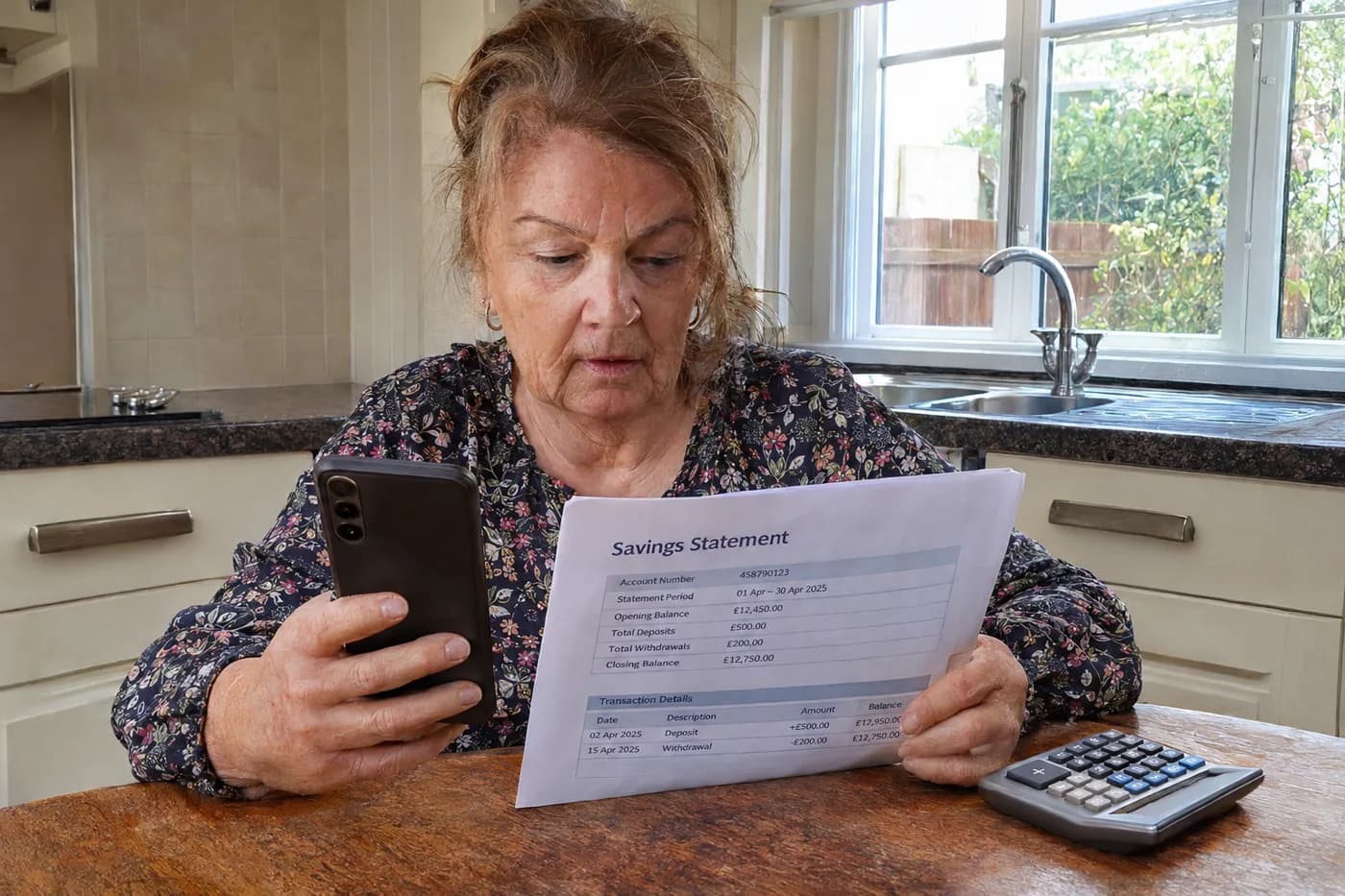
If you're under 65 and buy your own health insurance, read #1 before you move a dollar in December. In one KFF example, a 60-year-old who earned $2,000 more went from about $6,175 to about $14,931 a year for a benchmark plan.
The free calendar from the insurance agent is down to its last page: a snowy barn over 31 white squares. A handful of them have real money attached. Most year-end money moves over 50 come down to a date. Some close Dec. 7. Some close on your last payday, which comes before Dec. 31. And some, happily, can sit until April while you eat pie.
14Moving cash to where it earns interest

Your emergency fund has one job: be there when the furnace quits. It doesn't have to sit in the savings account attached to your checking, earning close to nothing while it waits.
As of Nov. 16, 2026, the FDIC's national average savings rate was 0.39%. The FDIC is the government agency that insures bank deposits. At that rate, $20,000 earns about $78 a year.
The FDIC lists a benchmark rate of 3.88% next to those averages. At that rate, the same $20,000 would earn about $776. That's a gap of about $698, or close to $58 for every month the money sits where it is.
The 3.88% is a benchmark, not an offer from any bank. Real money can beat it, though: the Treasury's 3-month bill yield was 4.37% on Nov. 23, 2026. Compare the real rates on a few accounts before you move anything. The usual fallback options aren't much better on average. Money market accounts averaged 0.64% and a 12-month CD 1.81%. Calling it a CD doesn't help you. The rate on it does.
Retirees argue about how much cash to hold. In a Reddit discussion on retirement cash, most said they keep 2 to 5 years of spending in savings, money market funds or short-term Treasury bills. That way they don't have to sell investments in a bad market. One retiree laid it out: "I keep 2 years IN HYSA and another 2 years in T-Bills....so 4 years total." HYSA means high-yield savings account.
Before you open anything, know where the safety net ends. FDIC insurance covers $250,000 per depositor, per insured bank, for each account ownership category. It does not cover stocks, bonds, mutual funds or annuities.
Leave enough in checking to cover anything that pays automatically. Then move the rest.
A lot of money advice assumes you have spare money. A woman near 60 wrote under a TikTok for women over 50: "59 and still living paycheck to paycheck barely making it." The next four moves don't ask for a spare dollar.
See more: 17 Things Bank Tellers Wish You Would Stop Doing →
13Checking beneficiaries and your will

Somewhere in an old HR file is a form you filled out your first week at a job. You picked a name in about ten seconds. That name may still be who gets the account.
FINRA, which regulates brokers, says beneficiary designations "typically override instructions in your will." They also stay in force through major life changes. A divorce, a remarriage, a family falling-out: the form doesn't notice any of them.
Kevin Lum, a Certified Financial Planner, says in a video for people in their 50s and 60s that he often finds a former spouse still listed on an old 401(k). Sometimes it's someone the owner dated decades ago. His advice: "Make sure the beneficiaries listed actually reflect your wishes."
Log in to each 401(k), IRA and other retirement account and find the beneficiary page. One rule to know if you're married: in employer plans, your spouse is typically required to be your primary beneficiary unless they sign a waiver.
The will is the slower half of this job. AARP research, quoted by two AARP staffers in ASA Generations, found that 51% of adults 50 and older say they have a legal will. Meanwhile 93% say it's important to have an updated will or similar document.
If you're in the other 49%, you may not finish a will by New Year's. You can still get the beneficiary pages done before it.
12Rounding up old 401(k)s from former jobs
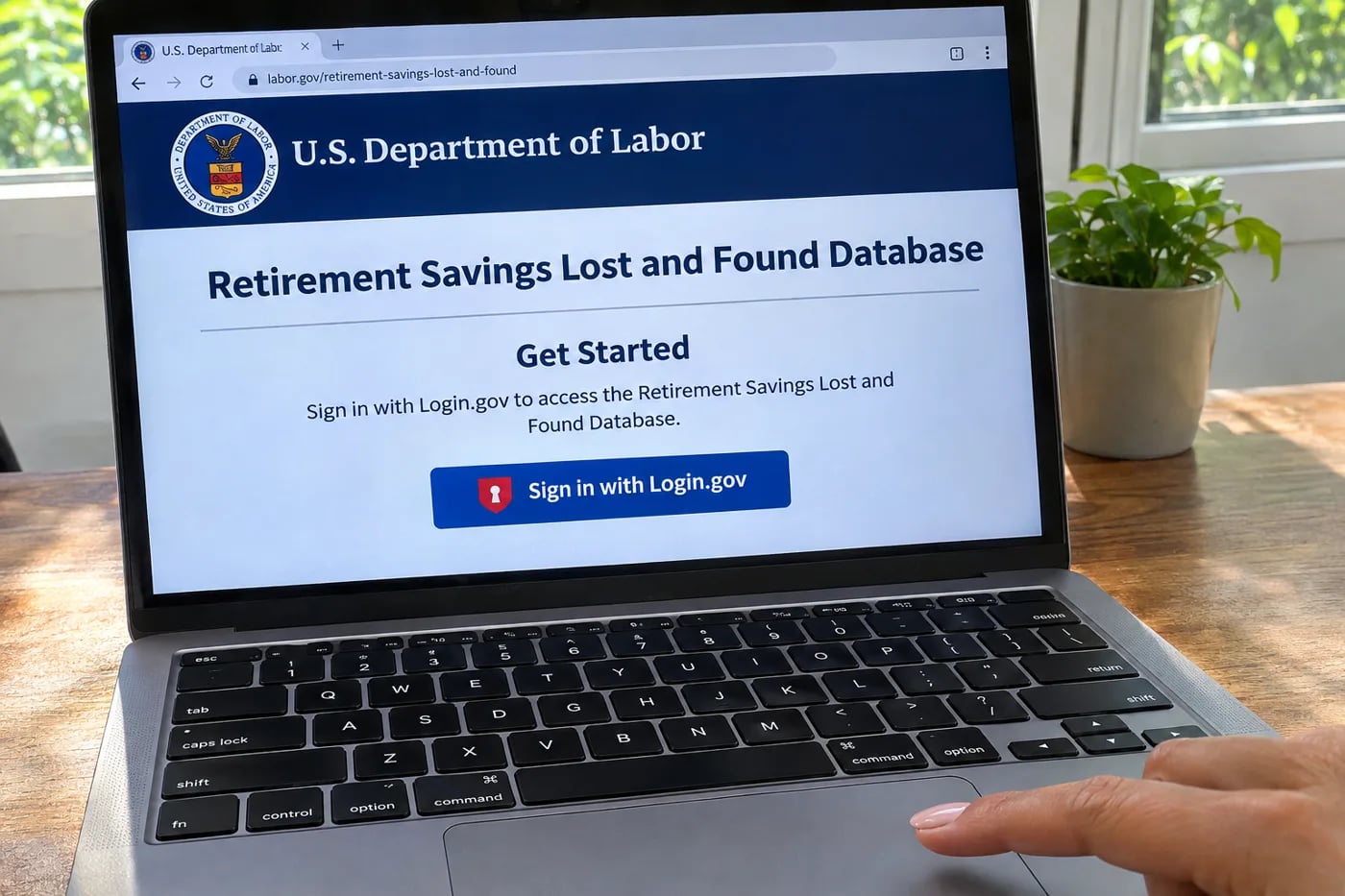
Every job you left with a 401(k) may have left one behind with you. The Labor Department runs a search tool for exactly this, called Retirement Savings Lost and Found.
- Verify who you are through Login.gov.
- Enter your Social Security number.
- See the plans linked to it, with contact details for whoever runs each one.
It doesn't search IRAs, government plans, certain religious plans, or benefits from a spouse who has died. If you get stuck, the Labor Department's benefits help line is 1-866-444-3272.
How much money is out there? Capitalize, a company that sells rollover services, estimated 31.9 million forgotten 401(k)s as of July 2025. It put the average balance at $66,691. That's a company's own estimate.
Once you find one, you can decide whether to roll old employer plans into an IRA or leave them where they are. That decision can wait. If you're 73 or older, finding the account can't, because a 401(k) you forgot about is also one whose required withdrawal (#9) you may be missing.
11Spending leftover FSA money before it disappears

Before you spend a cent, find out which rule your plan follows. A flexible spending account (FSA) is the pre-tax account at work for medical costs, and the IRS lets each plan choose how forgiving to be.
Health FSAs are generally use it or lose it. A plan may give you a grace period of up to 2½ months after the plan year ends to rack up more expenses. Or it may let you carry some money over. It can't do both. The IRS puts it flatly: "A plan adopting a carryover provision is not permitted to also provide a grace period." A plan doesn't have to offer either one.
For plan years starting in 2026, you can put in up to $3,400 and carry over up to $680.
- No grace period, no carryover: the last day of the plan year is your deadline. That's Dec. 31 if your plan runs on the calendar.
- Grace period: you get up to 2½ more months, so about mid-March for a calendar-year plan.
- Carryover: up to $680 moves into next year, and anything above that is gone.
If your plan year doesn't start in January, none of those dates are yours. Check the plan's website or the benefits summary HR gave you.
That plastic card with the benefits company's logo has probably been tucked behind your library card since spring. Look up your balance tonight. If you have $900 left and your plan allows the full $680 carryover, $220 of it has to be spent.
10Using your health deductible and dental benefits before January

You already paid for these, one premium at a time. Use them before the plan year ends.
The average single-coverage deductible for workers with one was $1,955 in KFF's 2026 survey of employer plans. KFF is an independent health policy research group. Thirty-eight percent of covered workers face $2,000 or more.
If you've already met your deductible, the same appointment can cost you less before your deductible resets than after. Your plan's paperwork gives the reset date. It also tells you how your out-of-pocket maximum resets, so look before you book anything.
On Medicare, the Part B deductible is $283 in 2026 and $292 in 2027. It's the same idea, with less money at stake.
Dental is where the bigger leftovers are. In the National Association of Dental Plans' data for 2024 plans, 73% of people in PPO-style dental plans had a yearly maximum of $1,500 or more. Only 2.9% of group enrollees used it all.
Some plans roll part of the unused money forward. About 42% of PPO enrollees get some kind of rollover, so check yours before you book the cleaning on the reminder card stuck to your fridge.
This only pays off for care you'd get anyway.
9Taking your required minimum distribution before December 31

If you're 73 or older, the IRS requires you to take a minimum amount out of your traditional IRAs and 401(k)-type plans every year. This is your required minimum distribution (RMD). For most people the deadline is Dec. 31.
The penalty dropped. It used to be 50%. Today, any amount you didn't take "may be subject to an excise tax of 25%." That falls to 10% if you correct it within two years.
Miss a $10,000 RMD and you could owe $2,500. Fix it in time and it's $1,000.
Three exceptions decide whether Dec. 31 applies to you:
- Your first RMD can wait until April 1 of the next year. Then you owe two in that year, with the second due by Dec. 31. Two withdrawals in one year means more income on one return, and #2 shows what that can cost.
- If you're still working, you can generally delay RMDs from your current employer's 401(k) until you retire, unless you own 5% of the business. IRAs get no such break.
- Roth IRAs have no RMDs while the owner is alive.
Don't wait until Dec. 30 to ask. Call your account company now and find out the last date it can process a withdrawal and still count it for 2026.
8Raising your 401(k) paycheck contribution before the last payday

The December 31 deadline for 401(k) money really means your last paycheck. And your last paycheck can be out of reach sooner than you think.
Catch-up contributions in workplace plans have to go in as paycheck deferrals before the plan year ends. That's Dec. 31 for calendar-year plans. Unlike an IRA, there's no April do-over.
Scott Brooks, a Certified Financial Planner, said it plainly in a year-end tax video: "Contributions to your workplace plan have to come out of your paycheck by December 31st, and the 2026 limit is 24,500, with an additional $8,000."
So if you're 50 or older by Dec. 31, your 2026 total is $32,500.
The catch is the lag. Human Interest, a 401(k) provider, says: "Typically, you can expect your new deferral rate to be applied within one to two pay periods after submitting your request." If you're paid every two weeks, a change you ask for in mid-December can miss the year's last check entirely.
To catch up, divide what you're short by the checks you have left. If you're $3,000 under your target with three paydays to go, each check gives up $1,000 before tax. Your take-home pay drops in December, when you're buying presents. That's the trade, and only you know if it fits.
While you're on that screen, the 2027 limits are already set: $25,500, plus an $8,500 catch-up, for $34,000 at 50 and older. You can set January's rate the same day.
See more: 17 Penny-Pinching Tricks Our Grandmothers Swore By →
7The bigger catch-up if you're 60 to 63

Turn 60, 61, 62 or 63 during 2026 and your catch-up limit jumps from $8,000 to $11,250. The IRS confirms the ages 60 to 63 enhanced catch-up "remains $11,250 instead of the $8,000". That makes your 2026 maximum $35,750.
It covers most 401(k), 403(b) and governmental 457 plans, plus the Thrift Savings Plan for federal workers. SIMPLE plans get a smaller boost for that age group: $5,250 in 2026.
| Your age at the end of the year | 2026 maximum | 2027 maximum |
|---|---|---|
| Under 50 | $24,500 | $25,500 |
| 50 to 59, or 64 and up | $32,500 | $34,000 |
| 60 to 63 | $35,750 | $37,250 |
The IRS names only ages 60 through 63, so expect to go back to the regular catch-up the year you turn 64. That gives you about $3,250 a year of extra room, for four years, and then the window closes.
One side note for higher earners. If your wages from that employer topped $150,000 the year before, plans with Roth features must take your catch-ups as Roth money, meaning after-tax. The final IRS rules generally apply starting in 2027. Until then, plans may use a "reasonable, good faith interpretation." So ask HR one question: how does our plan handle my catch-up this year?
6IRA and HSA money can wait until April
Two accounts give you until the tax-filing deadline in April, and mixing them up with the Dec. 31 accounts is a common slip. In a Reddit thread on last-minute year-end moves, people confused which accounts close Dec. 31 and which can wait.
Scott Brooks put it best in his deadline rundown:
"Knowing which is which keeps you from assuming you have time when you do not." Scott Brooks, CFP
IRAs (individual retirement accounts). The 2026 limit is $7,500, or $8,600 at 50 and older. IRS instructions count contributions "made in 2026 and through April 15, 2027, designated for 2026." When you deposit between January and April, tell the account company which year the money is for.
Roth IRAs have income limits. For 2026, the ability to contribute phases out between $153,000 and $168,000 for single filers, and between $242,000 and $252,000 for joint filers.
HSAs (health savings accounts). These go with a high-deductible health plan. The 2026 limits are $4,400 for self-only coverage and $8,750 for family coverage, plus $1,000 more at 55 or older. Once Medicare starts, the IRS says, "your contribution limit is zero," beginning with your first month enrolled.
For 2025, HSA money could go in through April 15, 2026.
Here's where waiting costs you. HSA money that goes in through your employer's payroll deductions skips Social Security and Medicare taxes as well as income tax. Money you deposit yourself after Dec. 31 still gets the income-tax deduction, but you've already paid those payroll taxes on it.
On $4,400, the payroll route saves about $336.60, unless your pay is high enough to hit Social Security's yearly wage cap. If you have paychecks left and your employer lets you change the amount, payroll beats April.
5Selling losing investments without breaking the 30-day rule

The deadline for tax-loss harvesting runs backward as well as forward. That's why your real cutoff can come before Dec. 31.
Sell an investment at a loss and the loss first cancels out gains. If losses are bigger than gains, you can deduct the lesser of $3,000 or your net loss. The limit is $1,500 if you're married filing separately. Anything beyond that, in the IRS's words, you "can carry the loss forward to later years."
Then comes the wash sale rule. Brooks states it simply: "If you buy the same or substantially identical investment within 30 days before or after the sale, the loss is disallowed."
Two things about that window catch people:
- It reaches backward. If you bought more of that fund in early December, that purchase is already inside the window.
- It reaches forward. Sell on Dec. 31 and you can't buy it back until about Jan. 30.
Brooks also warns against waiting for the last week of December, since transfers take time to go through.
4The new charity rules for 2026
Three charity rules matter at year-end in 2026. Two are brand new, and which one applies depends on how you file.
| If you... | What changed or applies | Watch out for |
|---|---|---|
| Itemize | Only giving above 0.5% of AGI counts | The first slice of giving earns nothing |
| Take the standard deduction | Deduct up to $1,000 in cash gifts ($2,000 joint) | No donor-advised funds, no noncash gifts |
| Are 70½ or older with an IRA | IRA gifts sent straight to charity stay out of income | Your account company needs processing time |
If you itemize. Starting in 2026, the IRS says, "you can only deduct charitable contributions that are more than 0.5% of your adjusted gross income." At $60,000 of AGI, your first $300 of giving earns no deduction. At $110,800, it's the first $554. Fidelity's example: a couple with $300,000 of AGI "could only deduct aggregate charitable donations in excess of $1,500."
If you don't itemize. This one is good news. Starting with tax year 2026, you can deduct up to $1,000 of qualifying cash gifts, or $2,000 for married couples filing jointly. "Noncash contributions do not qualify," so the bag of coats for the thrift store doesn't count. Cash sent to a donor-advised fund doesn't count either. Keep receipts, canceled checks or bank records.
If you're 70½ or older with an IRA. This rule isn't new. A qualified charitable distribution (QCD) sends IRA money straight to a charity. The 2026 limit is $111,000 per person. The IRS confirms it "will count towards your required minimum distribution", and it isn't counted as income.
The deadline is Dec. 31, so build in time for processing.
Bunching means giving two years' worth in one December, itemizing that year, and taking the standard deduction the next. A donor-advised fund helps some people do it. The IRS describes it as an account run by a charity sponsor: "Once the donor makes the contribution, the organization has legal control over it," while you suggest where grants go later.
Bunching only pays when two years of gifts plus your other itemized deductions, minus the new floor, beat the 2026 standard deduction. That's $16,100 single or $32,200 joint, and more once you're 65. If you give a few hundred dollars a year, bunching won't get close. The new $1,000 deduction is the rule that helps you.
3The extra $6,000 deduction once you're 65

Be 65 by Dec. 31, 2026, and you can claim an extra $6,000 deduction for the year. It's $12,000 for a married couple if both of you qualify. It sits on top of the extra standard deduction you already get at 65, and it runs from 2025 through 2028.
Two things decide whether you get all of it.
First, your Social Security number has to be on the return.
Second, your income has to stay low enough. It phases out above $75,000 of modified AGI, or $150,000 for joint filers. Modified AGI is the income figure the IRS uses for this test. The $6,000 is reduced by 6% of the amount by which your modified AGI exceeds $75,000 ($150,000 joint). If you're near $75,000, ask whoever does your taxes before December adds anything. A big IRA withdrawal, an investment gain or a Roth conversion can all push you closer.
IRS Publication 505 confirms the ceiling: "The maximum amount of the deduction is $6,000 ($12,000 if both spouses are eligible)." If your 65th birthday falls in 2029, you miss it.
2Year-end income that raises Medicare premiums two years later
Medicare reads your tax return two years late. Its income surcharge on premiums kicks in when your modified adjusted gross income "as reported on your IRS tax return from 2 years ago is above a certain amount."
So income you add in 2026 shows up in your 2028 Medicare premiums. That includes a Roth conversion, a large IRA withdrawal or a big capital gain. Medicare hasn't published the 2028 income lines yet.
The 2026 lines show how sharp the edge is. A single person at $109,000 or less paid $202.90 a month for Part B. One dollar over, the bill jumps to $284.10, plus a Part D surcharge. In 2027, about 9% of people with Part B pay this surcharge.
A Roth conversion is where this bites hardest. Brooks calls it a trade in his conversion segment: "You are paying tax now in exchange for tax free growth and withdrawals later, which is a real trade off and not just a free win." Then: "Additionally, it cannot be undone once you do it." The IRS agrees that conversions made since 2018 can't be reversed.
You can ask Social Security for a new decision after a "life-changing event" that significantly lowered your income. A conversion you chose isn't one of those events. The list includes:
- death of a spouse, marriage, divorce or annulment
- working less or stopping work
- losing income-producing property or an employer pension
- a settlement payment from a current or former employer
If you stopped working in 2026, though, that is on the list, and it's worth asking about.
So before you convert in December, add up your 2026 income first. Then decide how close to a line you want to land. The line rose from $109,000 to $112,000 between 2026 and 2027, but the 2028 number isn't out, so leave yourself some room.
One Medicare date comes before all of this. Open enrollment ends Dec. 7, and changes take effect Jan. 1, 2027. Part D's yearly out-of-pocket cap rises to $2,400 in 2027. Nancy LeaMond, AARP's chief advocacy officer, said in AP's report: "It's more important than ever to shop around, compare your options, and choose the coverage that's best for you."
1Pre-Medicare income and the health-insurance subsidy cliff

If you're under 65 and buy your own plan through HealthCare.gov or your state's marketplace, the most expensive line of your year is one income number. Help with your premiums stops completely at 400% of the federal poverty level.
For 2026 coverage, that cliff sits at $62,600 for a single person. Income from the previous year is used to calculate marketplace savings for the next year, so your 2026 income feeds 2027 savings.
For 2027 coverage, the cliff works out to $63,840 for a single person or $86,560 for a couple. That's based on HealthCare.gov's 2026 poverty guidelines.
Here's how steep it is. Before the extra federal help expired, KFF's Shameek Rakshit worked an example for a 60-year-old. At $62,000 of income, a benchmark plan would cost about $6,175 a year. At $64,000, the same plan would cost about $14,931, full price, with no help at all.
In KFF's example, $2,000 more income meant about $8,756 more a year for a 60-year-old.
And plans got pricier in 2026 anyway. The average marketplace deductible rose 37%, from $2,759 to $3,786. Average monthly premium payments rose 58%, from $113 to $178.
Commenters under a retired accountant's TikTok ask how they'll pay for health insurance before Medicare at all. If you're one of them, December is when you still have some control over the number.
- Add up 2026 income first: pay, pension, IRA withdrawals and investment gains you've already taken.
- If you're near the line, hold off on a Roth conversion or large withdrawal. Converted money counts as income here too, and it can't be undone.
- If you've taken gains, selling losers before Dec. 31 (#5) can offset them.
Then mind the dates. Dec. 15 is the last day to enroll for coverage that starts Jan. 1, and open enrollment ends Jan. 15. States that run their own marketplaces may set different dates, so check yours. New Jersey adds its own help above the federal line: its program reaches incomes up to 600% of the poverty level, or $95,760 for one person in 2027.
The bottom line
Three of the traps above hang on one number: your total income for 2026. Health-plan help and Medicare's surcharge each change at a line. The $6,000 deduction shrinks once modified AGI passes $75,000 ($150,000 joint).
Before you move a dollar in December, get that number roughly right. Take the year-to-date figure from your last pay stub. Add any pension, any IRA withdrawals and any investment gains you've already taken.
Then ask the one question that matters in late December: which line am I closest to, and how far away is it?
Up next
12 Places to Keep Your Savings Other Than a Big-Bank Account, and the Catch With Each
Twelve places to move your cash, each with its insurance, its wait time and its fine print, so you can match the right one to money you need this year or in five years.
Read the list →


Bonus: Four quick checks for Social Security, Medicare and a year that changed
- Social Security announced a 3.6% raise for 2027. Scammers may demand a fee to "activate" the raise. No fee is required. Report it at ssa.gov/scam or 1-800-269-0271.
- If you collect Social Security before full retirement age and still work, earnings above $24,480 in 2026 cost you $1 in benefits for every $2. Check whether a December bonus or extra shifts push you over. The withheld money comes back later as larger monthly checks once you reach full retirement age.
- If you lost a spouse in 2026, the IRS treats you as married for the full year as long as you don't remarry that year. A surviving spouse with dependent children may file as a qualifying surviving spouse "for two years after their spouse's death," keeping joint rates. Once you file single, the jump is real: on 2026 brackets, the 22% rate starts at $50,400 for a single filer, compared with $100,800 for a joint return. A spouse's death is also on Social Security's list of reasons to redo a Medicare surcharge.
- Before Dec. 7, check whether any of your prescriptions are among the drugs getting Medicare-negotiated prices in 2027. The new ones include Ozempic, Rybelsus and Wegovy. Then compare plans with that in mind.
Questions people also ask
What is the deadline for 401(k) contributions for 2026?
For calendar-year plans, 2026 contributions must come out of your paychecks by Dec. 31, and there's no April grace period like IRAs get. The 2026 limit is $24,500, plus $8,000 at 50 or older, or $11,250 if you're 60 to 63, according to the IRS. A rate change typically takes one to two pay periods, so ask HR in early December.
Can I still contribute to an IRA after December 31?
Yes. You can make 2026 IRA contributions through April 15, 2027, as long as you designate them for 2026. The limit is $7,500, or $8,600 at 50 and older.
Do I have to take my RMD by December 31?
Generally yes: Dec. 31 is the deadline for every year's required minimum distribution except your first, which can wait until April 1 of the following year. If you wait, you'll take two in that year. Missing one can bring a 25% excise tax, or 10% if you fix it within two years.
Will a Roth conversion raise my Medicare premiums?
It can, because Medicare's income surcharge uses your tax return from two years earlier, so a 2026 conversion counts toward 2028 premiums. The 2028 income lines aren't published yet. Under the 2026 table, single filers above $109,000 (joint above $218,000) pay at least $284.10 a month for Part B instead of $202.90. A conversion you chose isn't one of the life changes Social Security accepts for an appeal.
Can I still contribute to my HSA after December 31?
Yes, if you deposit directly, up to the tax deadline. For 2025 contributions that was April 15, 2026, and the same pattern points to April 15, 2027. Payroll contributions also skip Social Security and Medicare taxes, which a direct deposit doesn't. Once you're on Medicare, your limit is zero from the first month.
Is it worth bunching charitable donations in 2026?
It's worth it only if two years of gifts plus your other itemized deductions, after the new 0.5% of AGI floor, beat your standard deduction of $16,100 single or $32,200 joint, plus the extra amounts at 65. If you don't itemize, you can now deduct up to $1,000 of cash gifts ($2,000 joint) without bunching. Gifts to donor-advised funds don't count toward that deduction.
Did any of these feel familiar?
Know someone who needs this?
Sources cited in this article
This article links to 49 outside sources, listed here so you can read them yourself.
- FDIC's national average savings rate www.fdic.gov/national-rates-and-rate-caps/national-rates-and-rate-caps-novem…
- Treasury's 3-month bill yield home.treasury.gov/resource-center/data-chart-center/interest-rates/TextView?…
- A Reddit discussion on retirement cash www.reddit.com/comments/1y1x6d7
- FDIC insurance covers $250,000 www.fdic.gov/resources/deposit-insurance/understanding-deposit-insurance
- A TikTok for women over 50 www.tiktok.com/@pastor.jacki.speaks/video/7707045289319795999
- FINRA www.finra.org/investors/investing/investment-accounts/retirement-accounts
- A video for people in their 50s and 60s www.youtube.com/watch?v=AKQThb4u--c&t=494
- Quoted by two AARP staffers in ASA Generations generations.asaging.org/wealth-disparities-in-a-moment-of-unprecedented-inte…
- Retirement Savings Lost and Found lostandfound.dol.gov
- Estimated 31.9 million forgotten 401(k)s finance.yahoo.com/news/americans-abandoned-31-9-million-101600271.html
- Generally use it or lose it www.irs.gov/publications/p969
- Carry over up to $680 www.mercer.com/insights/law-and-policy/2026-health-fsa-other-health-and-frin…
- Average single-coverage deductible www.kff.org/health-costs/2026-employer-health-benefits-survey
- $283 in 2026 and $292 in 2027 www.cms.gov/newsroom/fact-sheets/2027-medicare-parts-b-premiums-deductibles
- National Association of Dental Plans' data www.nadp.org/new-data-sheds-light-on-dental-benefits-and-the-cost-of-serving…
- Deadline is Dec. 31 www.irs.gov/retirement-plans/retirement-plan-and-ira-required-minimum-distri…
- Paycheck deferrals before the plan year ends www.irs.gov/retirement-plans/plan-participant-employee/retirement-topics-cat…
- A year-end tax video www.youtube.com/watch?v=-95G_5OKbRo&t=185
- 2026 total www.irs.gov/newsroom/401k-limit-increases-to-24500-for-2026-ira-limit-increa…
- Within one to two pay periods humaninterest.com/learn/retirement-glossary/deferral-rate
- 2027 limits are already set www.irs.gov/newsroom/401k-limit-increases-to-25500-for-2027-ira-limit-remain…
- Final IRS rules www.irs.gov/newsroom/treasury-irs-issue-final-regulations-on-new-roth-catch-…
- A Reddit thread on last-minute year-end moves www.reddit.com/comments/1pvm4rp
- Through April 15, 2027 www.irs.gov/instructions/i1099r
- Social Security and Medicare taxes www.irs.gov/publications/p15b
- The lesser of $3,000 www.irs.gov/taxtopics/tc409
- States it simply www.youtube.com/watch?v=-95G_5OKbRo&t=373
- More than 0.5% of your adjusted gross income www.irs.gov/publications/p505
- $300,000 of AGI www.fidelity.com/learning-center/personal-finance/charitable-giving-tax-chan…
- Up to $1,000 of qualifying cash gifts www.irs.gov/newsroom/irs-reminder-permanent-charitable-contribution-deductio…
- $111,000 per person www.fidelity.com/retirement-ira/required-minimum-distributions-qcds
- "will count towards your required minimum distribution" www.irs.gov/publications/p590b
- "Once the donor makes the contribution, the organization has legal control over it," www.irs.gov/charities-non-profits/charitable-organizations/donor-advised-funds
- An extra $6,000 deduction www.irs.gov/newsroom/one-big-beautiful-bill-provisions-individuals-and-workers
- Reduced by 6% www.law.cornell.edu/uscode/text/26/151
- "as reported on your IRS tax return from 2 years ago is above a certain amount." www.medicare.gov/node/38266
- $202.90 a month for Part B www.cms.gov/newsroom/fact-sheets/2026-medicare-parts-b-premiums-deductibles
- His conversion segment www.youtube.com/watch?v=-95G_5OKbRo&t=312
- "life-changing event" secure.ssa.gov/poms.nsf/lnx/0601120005
- Open enrollment ends Dec. 7 www.pbs.org/newshour/health/medicare-open-enrollment-starts-now-these-change…
- Cliff sits at $62,600 www.kff.org/affordable-care-act/the-average-marketplace-deductible-grew-by-a…
- HealthCare.gov's 2026 poverty guidelines www.healthcare.gov/glossary/federal-poverty-level-fpl
- Worked an example www.kff.org/quick-insights/a-steep-subsidy-cliff-looms-for-older-middle-inco…
- A retired accountant's TikTok www.tiktok.com/@iamwarnertaylor/video/7694113938740399391
- Dec. 15 www.healthcare.gov/quick-guide/dates-and-deadlines
- Program www.nj.gov/getcoverednj/financialhelp/gethelp
- 3.6% raise for 2027 oig.ssa.gov/scam-alerts/2026-10-21-social-security-2027-cola-announced-benef…
- $24,480 in 2026 247wallst.com/personal-finance/2026/10/02/social-securitys-24480-earnings-li…
- Married for the full year www.irs.gov/newsroom/filing-a-final-federal-tax-return-for-someone-who-has-d…

Jheremy Raquel (JR) Agabao
Editor
JR Agabao edits PennySaver USA. With a working background in bookkeeping and HR, she checks the prices, rules and fine print in every guide before it reaches readers.
More from Jheremy Raquel (JR) Agabao



16 Things Black Friday Antivirus and VPN Deals Won't Tell You Before You Buy
22 min read
Most read
- 115 Bank and Card Fees Worth One Phone Call to Get Waived
- 215 Things to Know About the Best Bank Account Bonuses That Can Beat a Black Friday Sale
- 316 Things Black Friday Antivirus and VPN Deals Won't Tell You Before You Buy
- 412 Places to Keep Your Savings Other Than a Big-Bank Account, and the Catch With Each