





17 Everyday Habits That Quietly Cost You Money
What 17 ordinary habits really cost you, from the delivery app to the "value" twin-pack, plus the so-called wasteful ones you should keep.

By Jheremy Raquel (JR) Agabao, Editor
Updated · 22 min read
- Written by our editor
- Cited 67 sources
- How we review

This is general information, not financial, tax or legal advice for your situation. Read our full disclaimer
The most expensive habit here belongs to the most careful savers. It's waiting at #1.
You nudge the hallway thermostat down a degree on your way to bed and feel a small, honest glow. Good for you. But the habits that waste money rarely feel like waste. They feel normal: a streaming bill that crept up $2 while you weren't looking, a car payment that "fit," a twin-pack you grabbed because the tag said VALUE. Most of us are wasting money without realizing it, and almost never on the things we feel guilty about.
17Ordering takeout when there's food at home
It's ten to seven, you're beat, and the chicken in the fridge needs 40 minutes you don't have. So you tap the app.
That tap costs you before a single fee shows up. In 2023 an investment research firm compared prices at 25 restaurant chains. The same food cost about 19% more on the delivery apps than inside the restaurant, and fast-food brands averaged 26%. One McDonald's order came to $22.87 at the counter and $28.97 on the apps.
Then the extras land on top: a delivery fee, a service fee, sometimes a local fee, and the tip. The $9.99-a-month memberships like DashPass and Uber One don't remove the service fees, which is news to a lot of people paying for them.
Across all ages, the average household spent $4,142 eating out in 2025, about $345 a month. Delivery is only part of that, but it's the part with a markup built in.
Now for the shortcut that looks wasteful and isn't. Members of r/povertyfinance say a little paid convenience at home, like precut vegetables, freezer meals or a frozen pizza, is what keeps them out of the drive-through on tired nights.
"Buying whole vegetables and never getting around to them is more expensive than buying precut that you will." A member of r/povertyfinance, on Reddit
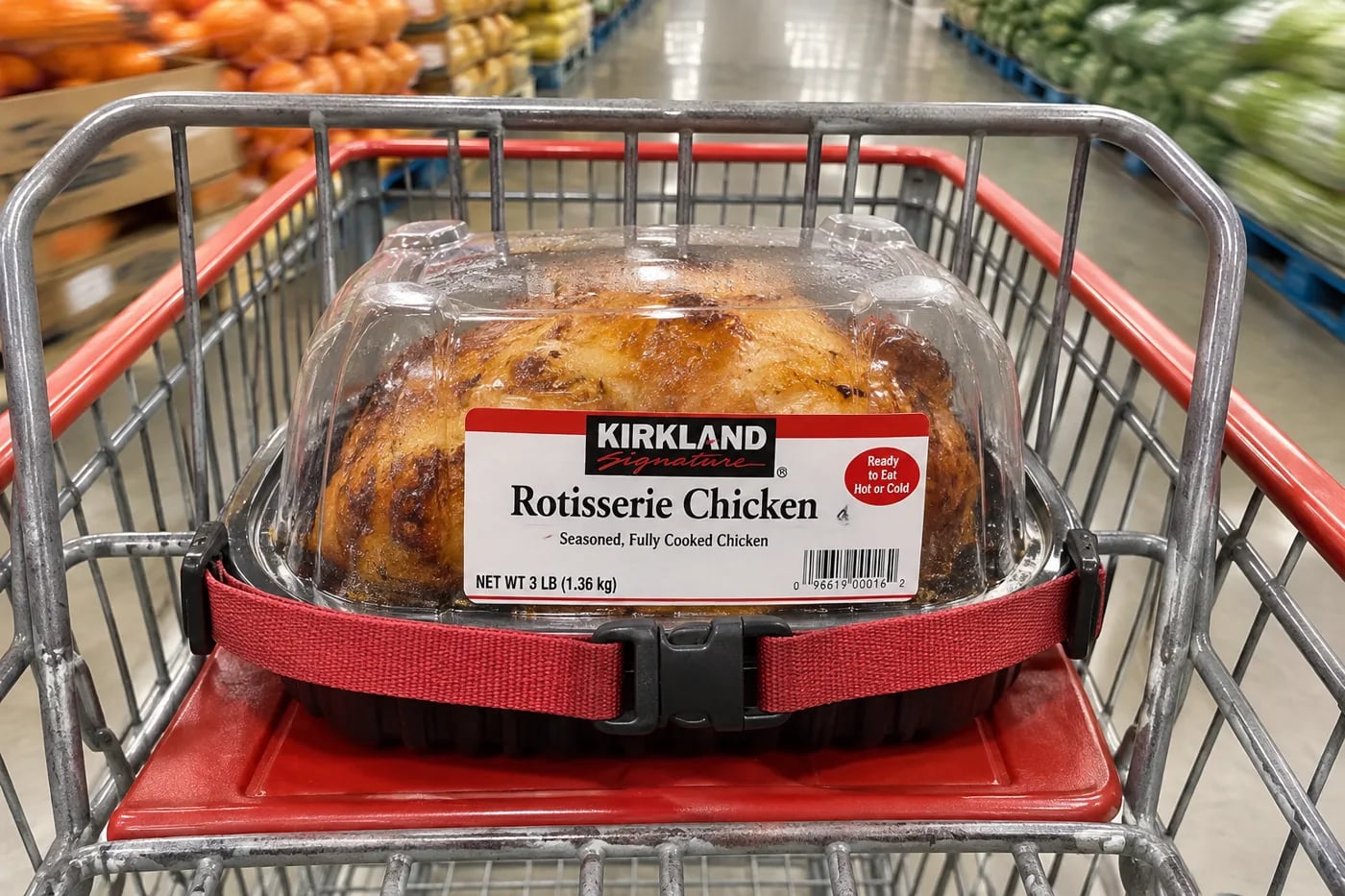
If you already have a Costco card ($65 a year for the basic one), the rotisserie chicken does the same job. It cost $4.99 from 1994 to 2007, went to $5.99 in 2008 and dropped back to $4.99 the next year. Costco sells it at a loss to get you through the door.
The $6.10 the apps added to that one McDonald's order would buy the whole bird, with change.
16Subscriptions that quietly raise their prices
"Wasn't that $17.99?" It was. Streaming services raised prices all through 2026, each time by an amount small enough to shrug at.
| Service | Was | Now |
|---|---|---|
| Netflix Standard | $17.99 | $19.99 |
| YouTube Premium | $13.99 | $15.99 |
| Peacock Premium | $10.99 | $12.99 |
| Apple TV+ | $12.99 | $14.99 |
| Disney+ Premium | $18.99 | $21.49 |
| Discovery+ ad-free | $9.99 | $11.99 |
Those figures come from Nerdist's tracker of 2026 increases. If you had all six, you're paying $150 more a year for the same shows.
Peacock's August raise was its fourth in four years. Annual subscribers kept their old rate until renewal, so paying yearly there locked in the price.
Most of us also guess low on our total. In a 2022 survey, people thought they spent $86 a month on subscriptions. Once they listed every charge, the average was $219, $133 more than they thought. And 42% were still paying for one they'd forgotten.
You may have heard cancelling was about to get easy. It didn't. A federal appeals court threw out the Click-to-Cancel Rule in 2025 because the Federal Trade Commission skipped a required step. The agency still goes after hard-to-cancel subscriptions under a 2010 law, and about 30 states have their own automatic-renewal laws. On an ordinary Tuesday, though, the cancel button is still wherever the company decided to hide it.
"Those things creep up and up and boom, one emergency now you're behind four more payments." A member of r/povertyfinance, on Reddit
Cancel the one you watched least last month. The shows will still be there if you come back.
15Carrying a credit card balance month to month
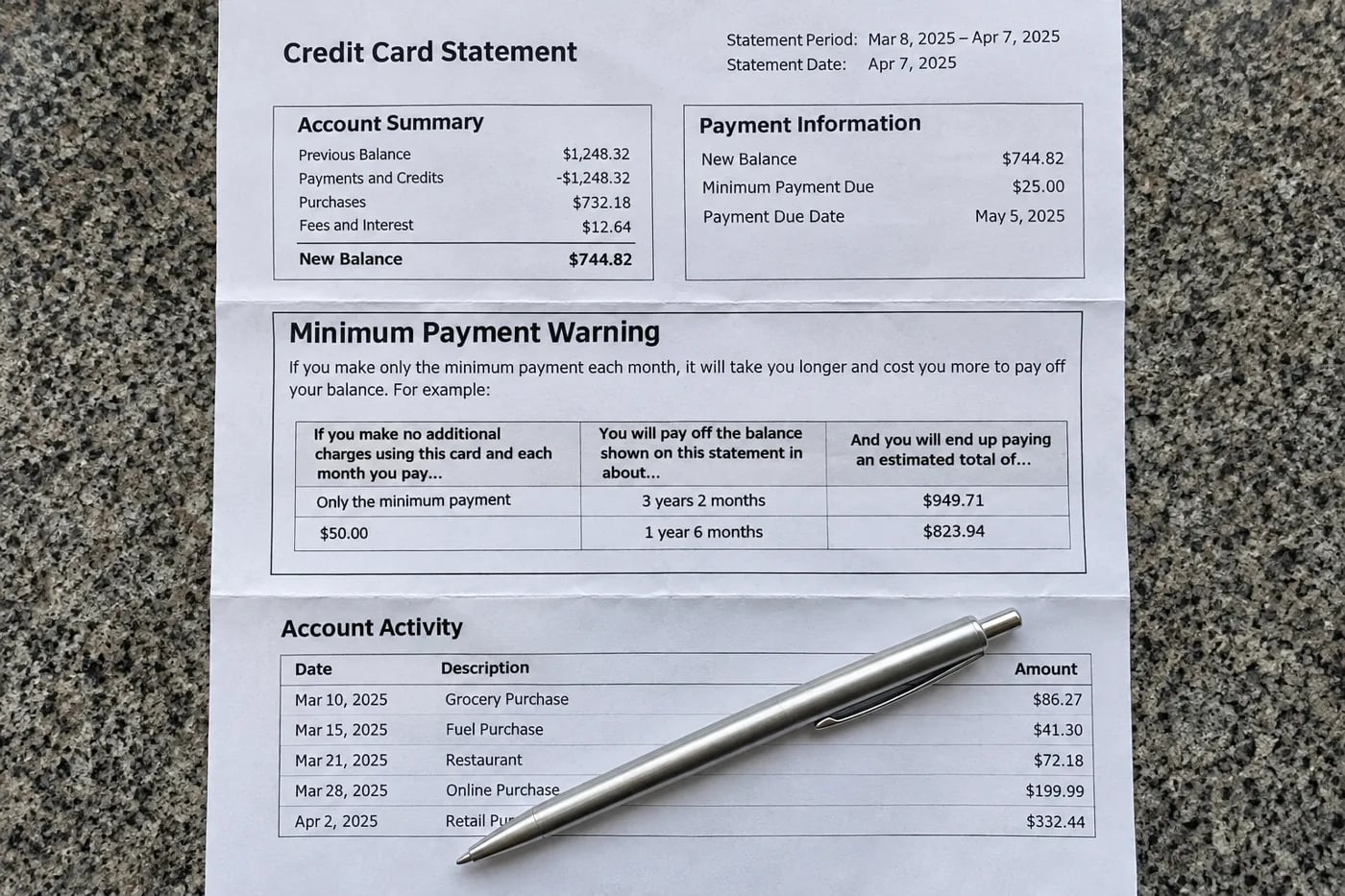
Carrying a credit card balance has become so ordinary that members of r/povertyfinance name it as the "normal" habit that does the real damage. Normal is expensive.
The average rate on cards that were charged interest hit 22.36% in the third quarter of 2026.
A $5,000 balance carried all year costs about $1,118 in interest.
That money buys nothing you can hold. And there's a second cost most people miss. As long as you pay the full balance by the due date, new purchases usually aren't charged interest. That's your grace period. Carry a balance and you can lose the grace period for that month and possibly the next, so this week's groceries start running up interest too.
If paying it all off isn't possible, look for the box on your statement. Card companies have to print the monthly payment that would clear your balance in 36 months. That figure assumes you stop adding new charges, so it only works if the card goes to a different wallet for a while.
14Telling yourself "it's only five dollars"
"Telling yourself, 'It's only x dollars.' $5, $10, $20... and suddenly you're broke before payday and don't know why." A member of r/povertyfinance, on Reddit
Five dollars never feels like a decision, so nobody plans for it. A member of r/Frugal has a fix that takes ten seconds: "Multiply supposedly low monthly costs by 12. The yearly cost is often a wake up that I don't need something."
Not all of it needs cutting. You just want to know which ones you'd pick if you saw the yearly price first.
You don't have to log every receipt for the rest of your life, either. Ramit Sethi, who hosts Netflix's money show "How to Get Rich," says to track everything for a month or two: "If you do this for a month or two you will have mindblowing insights about where your money goes."
After that, he says, stop logging every item and watch only the few categories that swing and that you can control: eating out, trips, and, if you have them, the kids. Two months of notes, then close the notebook.
13Adding items to reach free shipping
The cart says $29.40. A banner says you're $5.60 away from free shipping. Right below it, a pack of batteries you don't need costs $7.99. You know how this ends.
Here are the numbers that trigger it:
- Amazon: free on orders of $35 or more shipped by Amazon if you don't have Prime, but it takes five to eight days. Prime costs $14.99 a month or $139 a year.
- Target: free if you spend $35 or more, pay with a Target Circle Card, or have Target Circle 360. The $35 rule doesn't cover Alaska or Hawaii.
Plenty of what lands in online carts goes back. Retailers see $165 million in returns for every $1 billion in sales, about one dollar in every six. Amazon even charges $1 for some UPS Store returns when a free drop-off like Kohl's or Whole Foods is closer. So the batteries can cost you a trip and a dollar.
The fix is boring and works. Check what shipping actually costs. If the filler costs more than the fee, pay the fee. If you're in no hurry, and Amazon's free shipping is slow anyway, leave the cart alone until you need something real.
Prime works out to about $11.58 a month. It pays off only if you'd spend that much on shipping anyway, or you really use the rest of what comes with it.
12Splitting a small buy into four payments
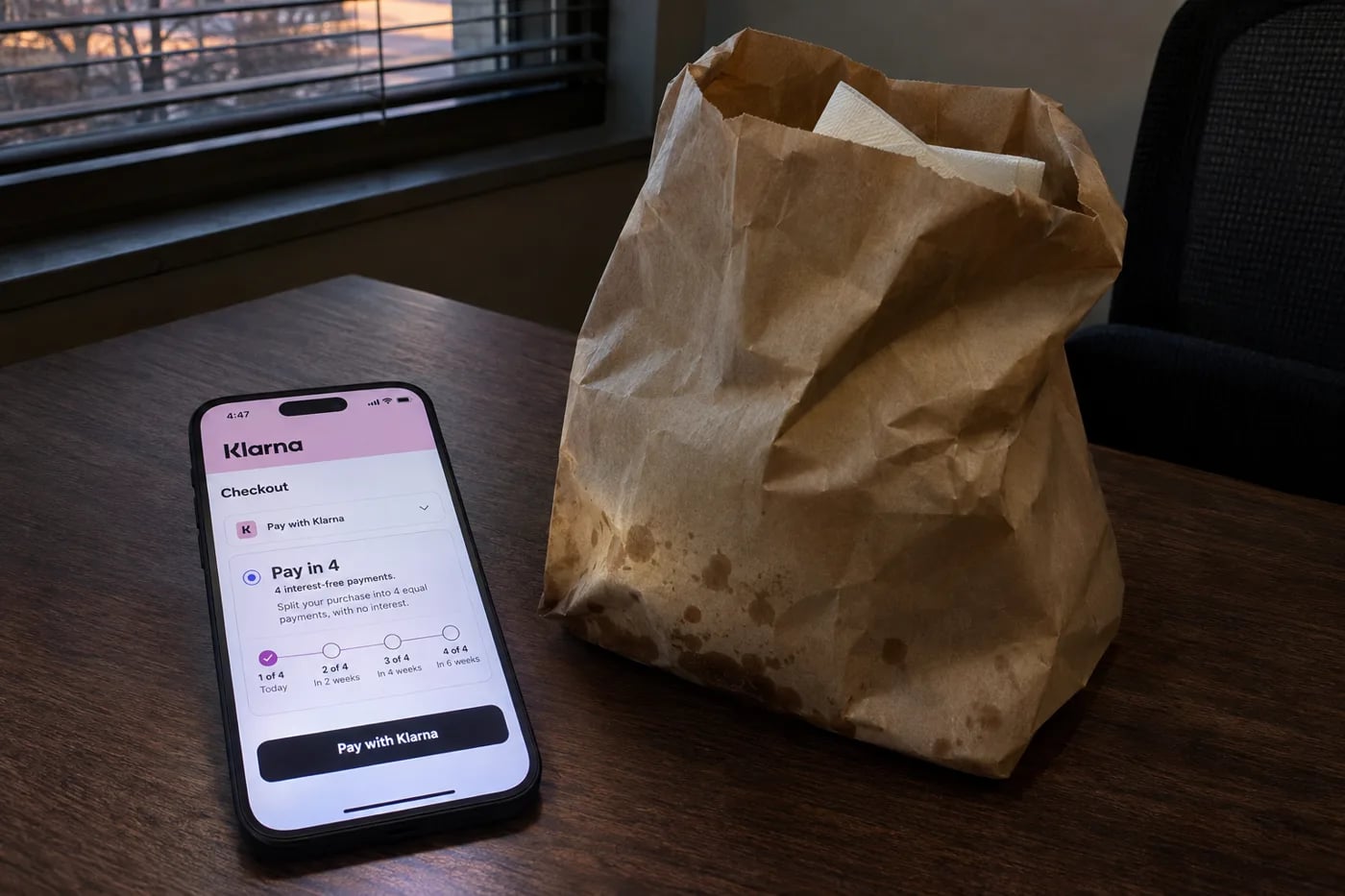
An offer to pay in 4 interest-free payments of $6.25 shows up under a $25 lunch order now. Members of r/povertyfinance describe splitting takeout lunches into installments and see it as a warning sign. They're right.
Buy now, pay later loans stack. When the Consumer Financial Protection Bureau studied six of the big lenders, it found about 63% of borrowers had several loans open at once at some point in the year. About a third borrowed from more than one company.
You also won't see them add up anywhere. These lenders have typically not reported the loans to the big credit bureaus. No credit report or card statement gathers them in one place. Four payments here, four there, leaving checking on different days.
Then come the late fees. Klarna's Pay in 4 charges no interest, but a missed payment rolls into the next one with a late fee of up to $7, with total late fees capped at 25% of the order. On that $25 lunch, the cap is $6.25, so one slip can add a quarter to the price of lunch.
Open each app you've used and count what's still open. Then put every due date on the calendar you actually look at.
11Judging a car by its monthly payment

The salesperson asks what monthly payment you were hoping to stay under. Answer that with a number and you've let the dealer arrange everything else around it.
Sean van Zyl, a Certified Financial Planner in Cape Town, South Africa, says the same mistake happens everywhere: "The only thing people look at what is my payment on the car. They don't look at what's the insurance on the car."
AAA puts a price on the whole picture, depreciation included. Owning and running a new vehicle costs an average of $12,863 a year in 2026, about $1,072 a month, up from $11,577 a year earlier. The biggest single cost is the car losing value, at $4,422 a year.
Meanwhile, loans have stretched to make the payment look smaller. In the third quarter of 2026, Edmunds found a record 25.5% of new-car loans ran 84 months or longer. That's seven years. The average payment was $787, and the average buyer will pay a record $9,938 in interest over the loan.
Before you sign, get three numbers:
- The out-the-door price, with every fee in it.
- The total interest over the whole loan.
- An insurance quote for that exact car.
The AAA figure is for new cars. A paid-off car you already own skips the loan and most of the lost value, which is why the cheapest car is so often the one in your driveway.
10Frugal habits that cost more than they save

There's a stack of coupons on the table, plastic bags rinsed and drying, and an alarm set so the dryer can run when power is cheaper. Every one of those feels thrifty.
Members of r/Frugal, in a thread about money-saving routines they'd given up, name exactly these. One quit couponing after noticing the coupons were mostly for junk food. Another stopped doing chores only at off-peak hours because it was wrecking her sleep. Washing plastic bags made the list too.
Here's the test I'd use. If you wouldn't buy it at full price, the coupon isn't saving you anything; it's selling you something. A coupon for your usual coffee is free money. A coupon for frosted snack cakes you never wanted is one of those things no longer worth your money.
Same with routines. If it costs you sleep, patience or a good mood, drop it without guilt. Keep the ones that take a minute and that you'd do anyway.
9Leaving savings in a near-zero checking account
When did you last check what your savings account pays? Not the balance. The rate.
The national average savings rate was 0.39% in November 2026. If your emergency fund sits in an account like that, or in plain checking, it's earning close to nothing.
| On $10,000 | Earns per year |
|---|---|
| At 0.39% | about $39 |
| At 3.75% | about $375 |
Online banks pay far more. CIT Bank's Platinum Savings, for one, pays 3.75% on balances of $5,000 or more, with no monthly fee and $100 to open. Below $5,000 it pays just 0.25%, so read the fine print on any account before you move. Every extra percentage point on $10,000 is another $100 a year, and those years add up. Rates move, so compare on the day you actually switch.
Make sure the new bank carries FDIC insurance. That covers up to $250,000 per depositor, per ownership category at each insured bank, so a joint account and a retirement account each get their own coverage.
Leave enough in checking for the bills that come out automatically. Move the rest, the emergency money you hope never to touch, where it earns something.
8Letting a raise quietly raise your spending
The raise many of you will see in 2027 doesn't come from a boss. Social Security benefits rise 3.6% for 2027, about $75 a month for the average retiree. Medicare Part B rises to $209.50 from $202.90, so if Part B comes out of your check, you keep about $68 of it.
In your defense: that increase exists because prices already went up. If it's spent on groceries before it arrives, that isn't lifestyle creep. That's groceries.
Lifestyle creep is the raise at work, or even the one you're expecting, that turns into a nicer everything before it ever reaches savings. Commenters under a TikTok money video say that's exactly where it starts. One said what worked was sending most of each raise straight to savings on payday.
Matt Saneholtz, a Certified Financial Planner, told CNBC to take "a raise, or a significant portion of one," and put it straight into an investment account, because you "won't miss what you don't see." That's pay yourself first, done by a computer instead of willpower.
If you're still working and 50 or older, the place to send it just got bigger. For 2027 you can put $25,500 into a 401(k), plus an $8,500 catch-up. At ages 60 to 63, the catch-up is $11,750 if your plan allows it. Raise your contribution the week the raise starts, and the extra never reaches checking at all.
7Grabbing the "value" pack without checking the math

Jon Duffy, who runs Consumer NZ, New Zealand's consumer group, has a line that works just as well in an American supermarket: "Often it's cheaper to buy two individual packs of ginger nuts rather than the twin pack." Ginger nuts are basically gingersnaps. The trick is the same everywhere.
He also tells shoppers to watch the register and read the receipt, and the US numbers back him up. Under the standard federal inspection test, a store passes if at least 98% of checked prices ring up right. The agency that wrote the test says plainly that this doesn't mean stores are allowed to get 2% wrong.
Some get far more wrong. North Carolina fined 10 stores for scanner errors in late 2025, including a Staples in Boone with a 19.33% error rate. That's nearly one price in five. And in October 2026, the Federal Trade Commission and 20 states sued Dollar General, which runs more than 21,000 stores. The suit says it charged more at checkout than on the shelf, despite tens of thousands of complaints.
Watch the screen as things ring up. If you get overcharged, your state's weights and measures office is who takes the report.
6Buying in bulk for a small household

The giant bag of potatoes was a great deal per pound, right up until the day you found it sprouting in the dark.
"I stopped buying in bulk. There's 3 of us, we're not going through things quickly and we don't have the space to store buckets and whatnot." A member of r/Frugal, on Reddit
Plenty of homes are smaller than three. One-person households made up 29% of all US households in 2025, up from 20% in 1975. Bulk sizes were designed for a crowd at the table.
Wasted food already costs about $728 per person a year on average, roughly 11% of what households spend on food. For a couple, that's about $1,456. Oversized packs of fresh food push that number up, not down.
People in small households who got burned say they switched to smaller packs and frozen produce. Bulk still makes sense for things that don't spoil and fit where you live: toilet paper, dish soap, the coffee you'll drink no matter what. For anything fresh, the cheaper unit price only counts if you eat the last unit.
5Staying loyal to your insurer or internet provider
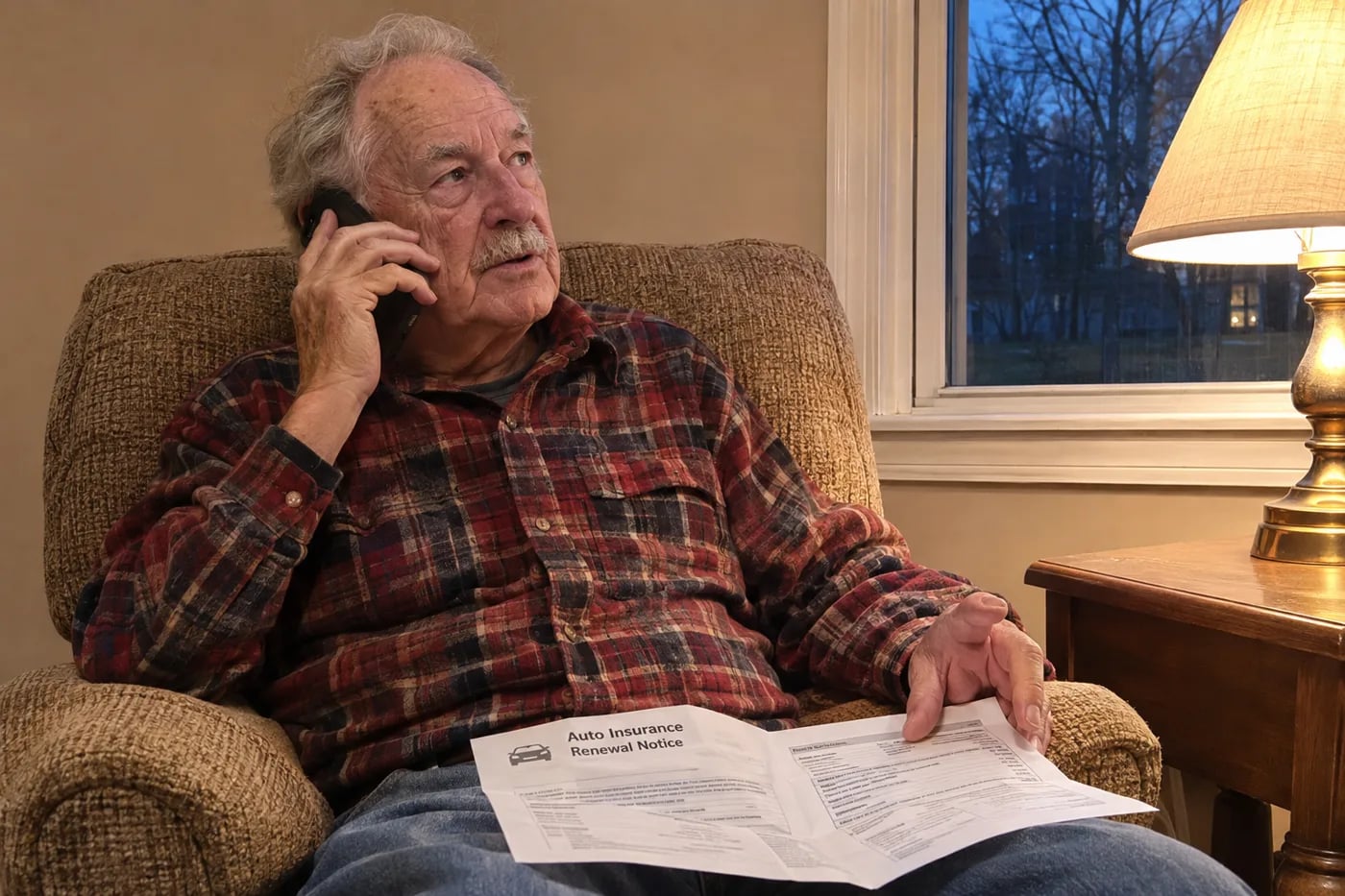
The renewal notice comes, the premium is up again, and you've been with them so long you can't remember shopping around. That loyalty may be exactly what they're charging you for.
There's a name for it in car insurance: price optimization, which means using "factors unrelated to risk, especially how likely the insurer believes you are to shop for a better rate," to set your premium. If the computer thinks you won't leave, you pay more.
Lee Barclay of Washington State's insurance commissioner's office put it this way in 2015: "this is modeling a consumer's behavior insofar as their likelihood of renewing with an insurer… we have concerns."
As of 2021, 19 states plus DC banned the practice for car insurance. That list can change, so ask your state insurance department whether yours is still on it. Britain went much further: since 2022, a renewal there can't cost more than the same policy for a new customer. There's no US rule like that.
Negotiating a cable bill works sometimes. In a 2016 Consumer Reports survey, 40% of those who tried got a better deal. Not great odds, but the call is free.
- Look up what two competitors charge for the same coverage or speed, and write it down.
- Call your provider and say, more or less, what Duffy suggests:
"Hey, hold on. Everyone else is cheaper. What are you doing to keep my business?" Jon Duffy, chief executive of Consumer NZ, in a video interview
3. If they won't budge, be ready to switch. That's the only part of the call they really believe.
For insurance, compare the same coverage and the same deductible. A cheaper quote with a $2,000 deductible isn't the same deal as your $500 one.
4Banning treats instead of budgeting for them

Here's a habit that costs money and looks like discipline: cutting out every treat, then caving on a bad week and spending more than the treats ever cost.
Van Zyl's fix is to plan for it: "Within your cash flow statement, it's good to budget for pocket money." Put in a set amount each month and spend it without guilt. Small buys only hurt when nobody planned for them.
Sethi goes bigger than most people expect. "I usually recommend 20-35% for guilt-free spending," he says, meaning the money you use to say yes to things you love. When a reader told him they spent only 13% on fun, he asked, "What's the money for?" and told them to raise it.
On a tight fixed income, 20% may be a fantasy. You don't need his percentage, though. You need the line in the budget. Forty dollars a month that's yours, no questions asked, beats a perfect plan you break by the 12th.
As Sethi says: "The spreadsheet is not actually the end goal. The end goal is living a rich life."
3Bailing out the same family member again
The call usually opens with "I hate to ask, but..." and you've written the check before the call is over.
If you have grown kids, you have plenty of company. A 2024 Pew Research Center survey found 59% of parents with children ages 18 to 34 had helped them financially in the past year. Of those, 36% said it hurt their own finances at least some. Among lower-income parents, it was 49%. Only 45% of the young adults said they were completely independent.
The same pattern shows up with brothers, nieces, old friends, anyone who's always just a little short. Members of r/povertyfinance who've lived it say giving again and again to someone who doesn't change drained them, and that it's fine to decide when enough is enough.
What helps is deciding before the phone rings. Pick a yearly number you can give without touching your own bills. Say out loud whether it's a gift or a loan, and quietly treat it as a gift either way. When it's gone for the year, you have a true answer that isn't about them: "That's what I had."
2Cutting so deep you skip the dentist

When money got tight, the dentist was the easiest thing to cancel. Nobody sends a late notice for a cleaning you never booked.
Many of you don't expect this next part. Original Medicare doesn't cover routine dental care in most cases: no cleanings, fillings, extractions or dentures. So at 65 a lot of people lose the coverage they had at work, or never had any, and put it off.
You'd be in big company. In a 2019 CDC survey, about one in five people aged 45 to 64 said they'd skipped dental care they needed because of the cost.
The bill for waiting is the part that hurts. A root canal and crown can run around $3,000, and a typical dental policy might pay only about a third. Plans usually pay 100% for cleanings, 80% for basic work and 50% for major work. The cheap part is the part they cover best.
Dentist Sara Stuefen, a spokesperson for the American Dental Association, says regular cleanings remain "the most cost-effective way to avoid expensive procedures."
If you're on Original Medicare, you can buy some of that coverage back. In 2023, more than three-quarters of Medicare Advantage plans with dental benefits set their yearly limit at $1,500 or more, and standalone dental plans are another route. A dental-hygiene school can cost less still: Pacific University's clinic charges $50 for an adult cleaning.
1Saving so hard you never let yourself enjoy it

If you've nodded along so far because you already do it all, this one's for you.
Dan Haylett, a retirement planner and regulated financial adviser in the UK, says out loud what the rest of the money world doesn't: "Under spending is the most expensive retirement strategy available, and it's invisible." It never shows up on a statement. It shows up as the trip you didn't take while you still could.
US numbers back him up. Research from the Employee Benefit Research Institute found that retirees who started with $500,000 or more had spent only 11.8% of it after 20 years. Looking at all retirees in the study, not just those with the biggest nest eggs, about a third actually ended up with more money than they started with after 18 years.
The institute's president, Lori Lucas, said retirees are "reluctant to spend down their assets" because they don't know how long they'll live and they fear huge medical bills. Fair fears. But for a lot of careful savers, the money outlasts the years when they had the health, the time and the cash all at once.
"You can earn the money back. You probably cannot earn the knee back." Dan Haylett, retirement planner, in a video interview
This doesn't fit everyone. A 2026 follow-up from the same institute found retirees with little saved and no pension saw their savings fall 89% over about two decades. If that's you, being careful is right. This is for people who have the cushion and still can't make themselves use it.
Haylett's fix is to practice. Now and then, spend on something you can easily afford but don't strictly need. Pick one this year: the train trip, the good seats, the week somewhere you've always meant to go. Book it before the voice in your head finishes its objection.
The bottom line
Which bill have you paid on autopilot the longest? That's usually where the money is hiding, because nobody has had a reason to look at it in years.
Pull up last month's card statement tonight and put a mark beside every charge you didn't actively choose. Not the ones you regret. The ones you didn't notice deciding.
Whatever you find, leave the $4.99 chicken alone.
Up next
14 Year-End Money Moves to Make Before December 31 If You're Over 50
Fourteen moves, from the paycheck change that can take one to two pay periods to the Medicare deadline on Dec. 7, with this year's limits and which ones can wait until April.
Read the list →
Bonus: five checks nobody mentioned
- Ask your bank if it still charges overdraft fees. Bankrate found an average of $26.77 in 2025, while Citi, Capital One and Ally dropped theirs years ago.
- Before your carrier talks you into a new phone, check how long yours gets updates. Google promises seven years for Pixel 8 and later, and iPhones usually get security updates for seven to eight years.
- If you run a second fridge that's more than 15 years old, ENERGY STAR says it could be costing you about $95 more a year, and many retailers will haul the old one away.
- Put your library card into Libby, the free library app for ebooks, audiobooks and magazines, before you renew any audiobook subscription.
- Price bottled iced tea against a $3.69 box of 24 Lipton family-size bags. At one bag per quart, that's about 15 cents a quart.
Questions people also ask
How do you overcome bad spending habits?
Make the habit mechanical so you don't have to rely on willpower. Planners quoted by CNBC suggest a 24-hour rule for anything in your online cart, because, as planner Jessica Goedtel says, "more than likely you'll have forgotten about it by the next day." They also suggest unsubscribing from store emails and not saving your card in shopping apps. U.S. Bank adds an automatic transfer to savings on payday.
Do I have to pay off my full credit card balance every month?
No. You're only required to pay the minimum shown on your statement, says the CFPB. But paying the full balance by the due date keeps your grace period, so new purchases aren't charged interest. With the average rate on cards charged interest at 22.36% in the third quarter of 2026, a carried balance gets expensive fast.
How much does the average American spend eating out?
The average US household spent $4,142 on food away from home in 2025, about $345 a month. That's an average across all ages. Households headed by someone 65 or older spent $2,689 in 2024, the newest figure for that group.
Is it OK to keep a "wasteful" habit if it stops me from spending more?
Yes, if it's planned and it replaces something pricier. A $4.99 Costco rotisserie chicken costs less than the $6.10 the delivery apps added to one McDonald's order in a 2023 price comparison. Ramit Sethi even recommends setting aside 20 to 35% for guilt-free spending. The habit that costs you is the unplanned one.
Which money-saving habits aren't worth the hassle?
The ones that cost you sleep, time or peace for a small return. Members of r/Frugal name couponing for things they'd never buy, doing chores only at off-peak hours and washing plastic bags as routines they dropped. A simple test: if you wouldn't buy it at full price, the coupon isn't saving you money.
Where should extra money go first, savings or retirement?
If you have a job with a 401(k) match, planners quoted by CNBC say to get the full match first, since missing any of it leaves money on the table. Fidelity found about 19% of employees weren't saving enough to get their whole match in 2026. Past the match, the order depends on how much of an emergency fund you already have. For 2027, workers 50 and older can add an $8,500 catch-up on top of the $25,500 limit.
Did any of these feel familiar?
Know someone who needs this?
Sources cited in this article
This article links to 67 outside sources, listed here so you can read them yourself.
- 19% more on the delivery apps foodondemand.com/04192023/study-shows-rising-delivery-price-premiums
- Don't remove the service fees www.cnbc.com/amp/2024/07/27/food-delivery-fees-are-rising.html
- $4,142 eating out in 2025 www.bls.gov/news.release/cesan.nr0.htm
- On Reddit www.reddit.com/comments/1qj7zsc
- $65 a year www.costco.com/gold-star-membership---new-member.product.3164.html
- $4.99 from 1994 to 2007 www.tastingtable.com/2198157/costco-rotisserie-chicken-raised-price-recession
- Nerdist's tracker of 2026 increases nerdist.com/article/every-streaming-price-increase-in-2026
- Its fourth in four years techcrunch.com/2026/08/18/peacock-is-raising-prices-across-all-of-its-stream…
- $133 more than they thought www.cnbc.com/2022/06/02/consumers-spend-133-more-monthly-on-subscriptions-th…
- Threw out the Click-to-Cancel Rule in 2025 www.jonesday.com/en/insights/2026/05/ftc-revives-clicktocancel-rule-new-risk…
- On Reddit www.reddit.com/comments/1lfnudq
- 22.36% in the third quarter of 2026 www.federalreserve.gov/releases/g19/current
- Lose the grace period www.consumerfinance.gov/ask-cfpb/what-is-a-grace-period-for-a-credit-card-en…
- Monthly payment that would clear your balance in 36 months www.consumerfinance.gov/ask-cfpb/a-box-on-my-credit-card-bill-says-that-i-wi…
- "Multiply supposedly low monthly costs by 12. The yearly cost is often a wake up that I don't need something." www.reddit.com/comments/1my24lm
- "If you do this for a month or two you will have mindblowing insights about where your money goes." www.youtube.com/watch?v=0M3bihoZaWA&t=121s
- $35 or more www.aboutamazon.com/news/retail/amazon-free-delivery
- Spend $35 or more www.target.com/help/article/000057407
- $165 million in returns for every $1 billion in sales www.thepennyhoarder.com/save-money/amazon-return-fee
- 63% of borrowers had several loans open at once www.consumerfinance.gov/archive/newsroom/cfpb-research-reveals-heavy-buy-now…
- Have typically not reported www.consumerfinance.gov/data-research/research-reports/consumer-use-of-buy-n…
- A late fee of up to $7 www.klarna.com/us/pay-in-4
- "The only thing people look at what is my payment on the car. They don't look at what's the insurance on the car." www.youtube.com/watch?v=s8wOYpp4P7c&t=732s
- $12,863 a year in 2026 newsroom.aaa.com/2026/09/aaa-new-vehicle-ownership-costs-hit-12863-annually
- A record 25.5% of new-car loans ran 84 months or longer www.click2houston.com/news/local/2026/10/19/new-car-payments-hit-record-787-…
- Name exactly these www.reddit.com/comments/1jiurkx
- Pays 3.75% www.cit.com/cit-bank/platinum-savings
- Up to $250,000 per depositor, per ownership category www.fdic.gov/resources/deposit-insurance/understanding-deposit-insurance
- 3.6% for 2027 www.cnbc.com/2026/10/14/social-security-cola-2027.html
- TikTok money video www.tiktok.com/@christina.mychas/video/7200444049562684678
- "won't miss what you don't see." www.cnbc.com/2025/06/20/white-lotus-star-jason-isaacs-reveals-his-money-habi…
- $25,500 into a 401(k), plus an $8,500 catch-up www.cnbc.com/2026/11/12/401k-contribution-limits-2027.html
- "Often it's cheaper to buy two individual packs of ginger nuts rather than the twin pack." www.youtube.com/watch?v=F6Al4CwF4lw&t=796s
- Passes if at least 98% of checked prices nist.gov/pml/owm/faqs-examination-procedure-price-verification
- A 19.33% error rate www.ncagr.gov/news/press-releases/2026/02/11/10-stores-pay-fines-following-p…
- 29% of all US households in 2025 www.census.gov/newsroom/press-releases/2025/families-and-living-arrangements…
- $728 per person a year www.epa.gov/system/files/documents/2025-04/costoffoodwastereport_508.pdf
- "factors unrelated to risk, especially how likely the insurer believes you are to shop for a better rate," www.fool.com/money/insurance/auto/articles/how-being-loyal-to-your-auto-insu…
- "this is modeling a consumer's behavior insofar as their likelihood of renewing with an insurer… we have concerns." www.insurancejournal.com/news/national/2015/11/17/389153.htm
- Can't cost more than the same policy for a new customer www.fca.org.uk/news/press-releases/fca-confirms-measures-protect-customers-l…
- 40% of those who tried money.com/survey-cable-companies-hate-consumer-reports
- In a video interview www.youtube.com/watch?v=F6Al4CwF4lw&t=613s
- "Within your cash flow statement, it's good to budget for pocket money." www.youtube.com/watch?v=s8wOYpp4P7c&t=428s
- "I usually recommend 20-35% for guilt-free spending," www.gobankingrates.com/saving-money/budgeting/ramit-sethi-you-can-budget-too…
- "The spreadsheet is not actually the end goal. The end goal is living a rich life." www.youtube.com/watch?v=0M3bihoZaWA&t=306s
- 59% of parents with children ages 18 to 34 www.pewresearch.org/social-trends/2024/01/25/financial-help-and-independence…
- Original Medicare doesn't cover routine dental care www.medicare.gov/providers-services/original-medicare/not-covered
- One in five people aged 45 to 64 www.cdc.gov/mmwr/volumes/70/wr/mm7025a5.htm
- Around $3,000 adanews.ada.org/huddles/public-misunderstanding-of-dental-insurance-is-wides…
- Set their yearly limit at $1,500 or more www.medpac.gov/wp-content/uploads/2025/06/Jun25_Ch2_MedPAC_Report_To_Congres…
- Pacific University's clinic www.pacificu.edu/about/campuses-locations/healthcare-clinics/pacific-dental-…
- "Under spending is the most expensive retirement strategy available, and it's invisible." www.youtube.com/watch?v=2PP8hu02AAI&t=729s
- Only 11.8% of it after 20 years www.cbsnews.com/news/retirees-can-be-too-frugal-with-their-spending
- "reluctant to spend down their assets" www.lifehealth.com/many-retirees-not-spending-accumulated-assets-fund-retire…
- Saw their savings fall 89% corpath.org/blog/2026/05/20/new-ebri-research-finds-guaranteed-income-stream…
- Nine states plus Puerto Rico and the Virgin Islands www.nist.gov/programs-projects/uniform-unit-pricing-tools-consumers-fight-sh…
- Rarely post them www.nist.gov/blogs/taking-measure/unit-price-right
- An average of $26.77 in 2025 www.bankrate.com/banking/checking/checking-account-survey
- Citi, Capital One and Ally dropped theirs www.bankrate.com/banking/citi-drops-nsf-overdraft-fees
- Seven years for Pixel 8 and later support.google.com/pixelphone/answer/4457705?hl=en
- Security updates for seven to eight years www.macworld.com/article/675021/how-long-does-apple-support-iphones.html
- About $95 more a year www.energystar.gov/products/refrigerators
- Libby libbyapp.com
- $3.69 box of 24 Lipton family-size bags www.target.com/p/lipton-family-black-iced-tea-bags-unsweetened-24ct/-/A-1301…
- One bag per quart www.lipton.com/us/en/our-teas/iced-black-tea-family-size-tea-bags
- CNBC www.cnbc.com/2021/09/16/impulse-spending-is-an-issue-for-consumers-how-to-re…
- U.S. Bank www.usbank.com/financial-education/spend/impulse-buying.html

Jheremy Raquel (JR) Agabao
Editor
JR Agabao edits PennySaver USA. With a working background in bookkeeping and HR, she checks the prices, rules and fine print in every guide before it reaches readers.
More from Jheremy Raquel (JR) Agabao

16 Things Black Friday Antivirus and VPN Deals Won't Tell You Before You Buy
22 min read
Most read
- 115 Bank and Card Fees Worth One Phone Call to Get Waived
- 215 Things to Know About the Best Bank Account Bonuses That Can Beat a Black Friday Sale
- 316 Things Black Friday Antivirus and VPN Deals Won't Tell You Before You Buy
- 412 Places to Keep Your Savings Other Than a Big-Bank Account, and the Catch With Each