

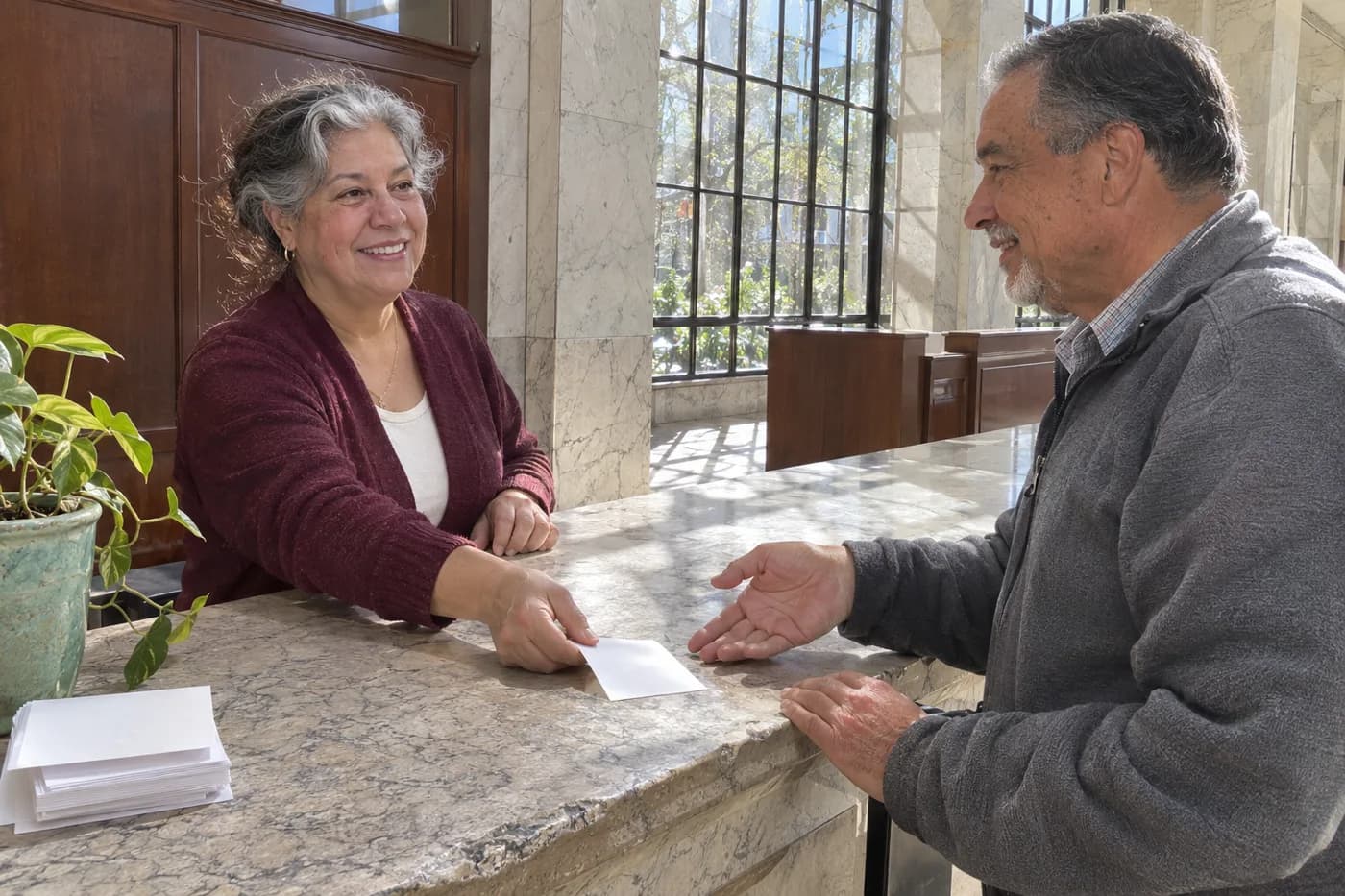


23 Things Grocery Store Workers Wish You Knew
From the rain check you can ask for to the tiny unit price on the shelf tag, here's what the people who stock and scan your groceries wish every shopper understood.
By Yury Byalik, J.D., Editor
Updated · 17 min read
- Written by our editor
- Cited 35 sources
- How we review

The bag of frozen peas is sweating onto your shopping list by the time you reach aisle nine. Behind the swinging doors, someone is breaking down a pallet.
Someone else is pulling soup cans forward so the labels face out. They see the same small, costly mix-ups every single week. Most of them would happily tell you about it if the line weren't so long.
23Asking if there's more in the back

If it isn't on the shelf, it almost certainly isn't in the back either. Ask anyway, and a worker may head to the back, though some admit they don't really search.
There's a reason. Older stores often give just 10 to 15% of their floor space to the backroom and storage. That's not much room for a whole store's worth of extra stock. Before holidays, workers say, it fills up completely.
Some workers admit, a little sheepishly, that the walk to the back doubles as a short break.
Asking once is still fair. Sometimes the last shift really didn't get to it. If they come back empty-handed, ask when they expect the next delivery and plan your trip around that.
22Leaving a cold item on a random shelf

Leaving a cold item on the wrong shelf is the thing that bothers grocery workers most, more than anything else shoppers do. A pack of chicken thighs tucked behind the boxed macaroni. A pint of ice cream, slowly going soft beside the paper towels.
They aren't fussing about tidiness. The problem is that a cold item left in a dry aisle usually can't go back in the cooler.
The worker who finds that chicken has no idea how long it's been out of the cooler. So into the bin it goes.
Changing your mind is completely normal. People do it all day.
Just hand the item over at checkout and say, "I don't want this one after all." One cashier says they'd much rather hear that than find items tucked in the candy rack at closing.
21Floor staff usually don't set regular prices

Workers say the people in aprons usually have no say in the regular price, and they don't know when something will go on sale. So when a shopper asks, "Why is coffee so expensive now?", the young man restocking the shelf would love to have an answer.
He doesn't.
So grumbling to the stocker feels good for about four seconds and changes nothing. If a price really bothers you, the company's customer service line or comment form is where it gets counted. A real complaint, sent to the right place, lands on a desk with someone's name on it.
And the stocker gets to finish his shelf. A checkout mistake is different: if the register charges more than the shelf tag, tell the cashier, as #1 explains.
20Ask for a rain check when a sale item is gone

The flyer had pork chops on the front page at a price that made you plan Tuesday's dinner around them. Now you're standing in front of an empty cooler slot with the sale tag still clipped on.
Most shoppers sigh and leave. You don't have to.
A federal rule covers this. Under a grocery advertising rule from the Federal Trade Commission (FTC), a store that ordered enough stock in time is in the clear.
If it didn't, it can make it right with a rain check, a similar item at the sale price, or something else at least equal to the advertised value. So a rain check isn't automatic, but it's always worth asking.
A rain check is simply a slip that lets you buy the item at the sale price later, once it's back in.
Go to the customer service desk and ask for one. Check whether it expires and whether there's a limit on how many you can buy. Then tuck it in your wallet next to your shopping list, where you'll see it on the next trip.
19The tiny unit price hiding on the shelf tag

Look at the shelf tag under almost any jar of peanut butter. The big number is the price. Off in a corner, in small type, there's often a second number: the cost per ounce, per pound or per count.
That small number does the math for you.
The federal measurement agency NIST uses a ketchup example. A 32-ounce bottle at $4.99 comes to 16 cents an ounce. A 14-ounce bottle at $3.19 comes to 23 cents an ounce. The cheaper-looking bottle is the pricier ketchup.
It also helps you catch "shrinkflation," when a package gets smaller but the price doesn't.
Whether you even get a unit price depends on where you live. No federal law requires it. Most states don't require it either. As of December 2024, only 9 states and 1 territory did.
If your store shows one, compare prices for the same unit, such as cost per ounce. Then pick the size you'll actually use.
18"Sell by" doesn't mean unsafe

That tub of sour cream two days past its date doesn't have to go in the trash. Most of us toss it without thinking, but the date on the package isn't a safety deadline, except on infant formula.
Here's what those dates actually mean. California's agriculture department, quoting the US Department of Agriculture (USDA), says package dates are not an indicator of the product's safety and are not required by federal law, with one exception: infant formula.
That cuts both ways: the date alone can't tell you whether that sour cream is safe. How it was stored matters, so follow the Food and Drug Administration's storage guidance too.
A "sell by" date is a message to the store. It tells staff how long to keep the item on display.
That confusion costs real money. The food-waste nonprofit ReFED found that mix-ups over date labels lead to 4.3 million tons of wasted food in the US every year, worth more than $21 billion to households and businesses.
That 43% was 37% back in 2016. The trash can is winning.
17Marked-down meat stickers near the date

The bright sticker catches your eye from across the meat case: a pot roast at a price you haven't seen in a while, because its date is close.
You can buy it without worrying it's a bad deal, as long as you have a plan for it.
The plan is usually your freezer. Just know that freezing won't make unsafe meat safe, so the roast needs to be fine when it goes in.
So the marked-down roast doesn't need to be Tuesday's dinner. It can be next month's.
Wrap it well, write the date on it with a marker, and put it in the freezer the day you bring it home.
16Sampling grapes before they're weighed

Almost everybody has done it. You pull one grape off the bunch to see if it's sweet before you commit.
Some stores don't mind at all, as long as you ask. Albertsons' chief operating officer, Susan Morris, put it plainly: "We'd love for customers to sample our grapes!" She suggests asking an employee for help before you dig in. A Whole Foods produce buyer says grapes often go into self-serve "sample domes."
What cashiers dislike is something else: by-weight food that gets eaten before it reaches the scale. A half-eaten bag of cherries can't be weighed properly, so the cashier has to guess. Many workers say they guess on the high side.
Ask first if you want a taste. If you want the whole snack, pay first, then eat it on the bench outside.
15The app says it's in stock, but it isn't

You checked the store's website before you went. It said three left. The shelf says zero.
Stores admit this happens. Target's help page says it cannot guarantee the accuracy of product information, because quantities are limited and change quickly.
Store staff usually can't look up another location's stock for you, either. Before you drive across town, or take the bus, pick up the phone and ask the other store to look on the actual shelf.
14Start with the package for cooking directions

"Can this go in the microwave?"
The stocker picks up the box and reads the back to you. You could have done that yourself, and so could she.
The package is usually the best answer in the building, for cooking directions and ingredients alike.
Read the box first. If you can't find or read the directions, ask for help.
13Digital coupons must be clipped before checkout

The register flashes a price higher than the one in the ad. The deal was real. It just had to be "clipped" online before you paid.
At Kroger, for example, you click "Load to Card" on the store's website or app, then scan your store card at the register. The discount comes off automatically. If it doesn't, Kroger says to ask the cashier for help or call Customer Service.
This catches a lot of people out. Consumer advocate Edgar Dworsky has pointed out that many seniors and lower-income shoppers without a cellphone or internet access miss out on digital-only savings entirely.
If that's you, ask at the service desk what they can do. A friend or relative can also help you load coupons to your own account on the store's website before you shop.
12Some store brands name the maker on the package

The store-brand box sits a shelf below the famous one, with plainer packaging and a smaller price.
Sometimes the package even tells you who made it. Some Costco Kirkland Signature products show the maker's logo right on the box: Reynolds on the aluminum foil, Starbucks on some of the coffee.
Next time, turn the store brand over and read the fine print. You might recognize a name. A familiar maker doesn't always mean the better price, so check the cost per unit too.
11The cheap milk and eggs that get you in the door

Why would a store practically give away the milk?
Because you came in for it. Richard Volpe, an agribusiness professor at Cal Poly, calls milk and eggs "textbook" loss leaders.
A loss leader is an item priced low, sometimes at a loss, to get you through the door. Milk and eggs are bulky, costly for shoppers to stockpile, and "lots and lots of people buy them."
Sometimes the loss is very real. In March 2025, economist Craig Richardson wrote that stores were losing money on each dozen eggs sold, paying about $7.74 wholesale and charging about $4.95. Kroger, Walmart, Trader Joe's and Costco put limits on egg purchases.
Richardson also notes there's little evidence that kind of pricing lasts long.
If the staple is on your list and you'll use it, take the deal. Then look hard at what's sitting in your cart next to it.
10The shelf spot a brand paid for

Some of the shelf in front of you is rented.
Brands often pay grocers what the FTC calls slotting allowances: one-time payments a supplier makes so its product gets placed on the store's shelves in the first place.
The FTC found the fees varied a lot from one kind of product to another. Retailers said they help cover the cost of taking a chance on new products.
So a product's place on the shelf doesn't tell you whether it's the best deal.
Make a habit of looking up and down before you reach, and compare the unit prices before you choose.
9Bring back bad produce for a refund

You cut into the cantaloupe at home and it's mush. Most people grumble and throw it out.
Plenty of grocers would rather you brought it back. Kroger's Fresh & Quality Guarantee, as The Daily Meal describes it, promises to replace or refund an item if you don't love it, with returns accepted within 30 days. Without a receipt, refunds over $10 come as a gift card.
Trader Joe's has long put it even more simply: "We tried it, we liked it. If you don't, bring it back for a full refund."
Policies differ from chain to chain, so ask at your own store's service desk. Keep the receipt in the bag until everything's eaten, and bring the sad cantaloupe back with you.
8Delivery app prices can run higher

Grocery delivery feels like a gift on a rainy week. But the price on the screen may not match the price on the shelf.
Instacart's help center says retailers set their own prices there, and some may set prices different than in-store prices. Some in-store sales may not apply either. That's before any delivery or service fee.
Then there are substitutions. If an item is out, Instacart lets you choose Best Match, a specific item or a refund. If you choose nothing, you get Best Match, so the shopper picks for you. You're refunded or charged the price difference.
If you'd rather go without than get a surprise brand, choose Refund for each item before you hit send.
7Near-date groceries at up to half off

The bakery's sourdough loaf is perfectly good today. Tomorrow it may be in a dumpster.
Some stores now sell those near-date items through Flashfood, a service listing meat, produce, dairy, bakery and other groceries at up to 50% off.
It works only at participating stores and needs a phone. If that's not your thing, ask the bakery counter how they handle day-old bread.
6Why unsold food isn't always donated

Videos of grocery workers throwing out trays of spoiled meat draw a flood of shocked comments. One question rises to the top every time: why didn't it go to a food pantry before it spoiled?
It's a fair question, and the answer is changing.
For years, stores worried about being sued if donated food made someone sick. A federal law signed in January 2023 widened that protection to cover businesses that donate directly to people in need, not only through nonprofits.
A lot already gets rescued. Feeding America says it sourced more than 2 billion pounds of food through retail donations last year. If you'd like to see more of it donated instead of tossed, ask your store's manager about their donation program, or check your local food bank's drop-off hours.
5What the person scanning your groceries earns

She's quick, she knows the produce codes by heart, and she just asked whether you found everything okay.
In 2025, cashiers in US food and beverage stores earned a median of $16.45 an hour, a little more than cashiers overall, who earned $15.81.
A full-time year at that rate comes to about $34,220, and part-time work is common.
4Long deli lines mean the counter's short-staffed

You pull a paper number. 47. They're serving 31. One person behind the counter is slicing turkey, wrapping cheese and answering the phone.
Workers say long deli waits usually come down to too few people doing too much work.
The numbers back them up. Food retailers reported 65% employee turnover in 2022, according to the grocery trade group FMI.
Across all of retail, workers quit at 2.6% a month in 2025, compared with 2.2% across private industry.
When it's your turn, have your order ready: "A pound of turkey, sliced thin." Then ask whether you can shop while they slice it, and when to come back.
3Self-checkout's "unexpected item in bagging area"

That robot voice. Again.
It isn't personal. A former retail worker describes a system that learns what each item "should" weigh from earlier scans. An item or bag outside that range can set it off.
Two habits help. Let each item settle before you scan the next one. And if the checkout has a "bag" button, press it before you set your own bags down. If you don't see one, ask the attendant how to add your bags.
Some stores have given up on the machines. Dollar General removed self-checkout from 12,000 of its 20,000-plus stores. Its CEO called shrink, meaning theft and loss, "the most significant headwind in our business."
Meanwhile, the voice will keep asking you to remove the item.
2The quietest times to shop the store

Ask the person stocking shelves when your store is usually quiet, then plan your next trip around the answer.
The worst grocery trip of the year is easy to predict. In 2025, the busiest grocery day in the US was the day before Thanksgiving. Foot-traffic firm Placer.ai found visits ran 82.6% above an average day. Long lines, empty cranberry shelves, and workers who've been on their feet since dawn.
So shop early. If you have room to store them, buy the canned pumpkin, stuffing mix and frozen turkey a few weeks ahead, and leave only the fresh things for the final week.
1The scanner can charge more than the shelf tag

The shelf tag said $2.99. The screen at the register says $3.49. Most of us don't notice, because we're bagging, chatting or finding our card.
In a national price check of 107,096 items in 1,033 stores, 1 of every 30 items rang up wrong. That was in 1998, and the box below shows how the errors broke down.
That 2% line isn't permission to be wrong. NIST, the federal agency behind the price-checking procedure, says it plainly: "It is unlawful in all States to advertise a price that is not accurate."
Watch the screen when your sale items go through. If one rings up high, say so right then, and point to the tag. If it keeps happening, call your state's weights-and-measures office.
The bottom line
Nobody in an apron is checking your receipt for you. That part is yours.
Next time you shop, read your receipt before you walk out. Run your eye down the sale items and match them to what you remember from the shelf. It takes about a minute, and the service desk is usually right there by the door.
Up next
29 Grocery Store Habits to Stop Right Now
Twenty-nine grocery-store habits, from trusting end-cap signs to skipping the receipt check, each with a quick fix that keeps more dollars in your wallet.
Read the list →


Bonus: Five things the store won't put on a sign
- Kroger's weekly sales typically run Wednesday through Tuesday, so a Wednesday trip gets you first pick of the new deals.
- At Publix, the meat cutters will custom cut your selection or re-package portions so you get just the quantity you need, whenever the store is open.
- Before you spend Sunday clipping the paper, check your store's load-to-card offers. Paper coupons from the Sunday paper made up just 2.3% of US coupon redemptions in 2025, while load-to-card digital offers made up 53.9%.
- Stores get paid to take your coupons. Energizer, for one, pays retailers 8 cents for handling each coupon properly redeemed.
- If the new hire doesn't know where the tahini lives, ask a second worker. The average supermarket carried 33,248 items in 2025, so it's an honest thing to miss.
Questions people also ask
Can I get a rain check if a grocery store runs out of a sale item?
Often, yes. Under a federal FTC rule, a store that runs out of an advertised item can make it right with a rain check, a similar item at the sale price, or something of equal value. The store can also be in the clear if it ordered enough stock in time. Ask at the customer service desk either way.
Is it illegal for a scanner to charge more than the shelf price?
Advertising an inaccurate price is unlawful in every state, according to NIST. In official inspections, a store fails if more than 2% of the prices checked don't match the register. If you think you were overcharged, you can contact your state's weights-and-measures office.
Does "sell by" mean food is unsafe to eat after that date?
No. A "sell by" date tells the store how long to display the item, and USDA guidance says package dates aren't a safety indicator. So the date can't promise the food is still good either; follow FDA storage guidance. Dates also aren't required by federal law, except on infant formula.
Can you sample grapes before you buy them at the grocery store?
Some grocers are happy for you to try one if you ask. Albertsons' chief operating officer has said customers are welcome to sample grapes and can ask an employee for help first. Policies vary by store, so ask before you pick.
How much do grocery store cashiers get paid per hour?
Cashiers in US food and beverage stores earned a median of $16.45 an hour in 2025. That's about $34,220 a year at full time, though part-time work is common in the job.
Why does self-checkout keep saying "unexpected item in bagging area"?
A former retail worker describes a system that checks each item against an expected weight range. Rushing between scans or adding your own bags can trigger the alert. Let each item settle, and ask the attendant how to add your bags if the controls aren't clear.
Did any of these feel familiar?
Know someone who needs this?
Sources cited in this article
This article links to 35 outside sources, listed here so you can read them yourself.
- 10 to 15% of their floor space to the backroom and storage foodtradenews.com/2026/01/29/ideal-grocery-store-size
- Grocery advertising rule from the Federal Trade Commission (FTC) www.law.cornell.edu/cfr/text/16/424.2
- A ketchup example www.nist.gov/news-events/news/2024/12/best-practices-uniform-unit-pricing-up…
- Are not an indicator of the product's safety and are not required by federal law plantingseedsblog.cdfa.ca.gov/wordpress/?p=12333
- Storage guidance www.fda.gov/consumers/consumer-updates/are-you-storing-food-safely
- 4.3 million tons of wasted food refed.org/articles/how-confusing-date-food-labels-are-hitting-your-wallet-fi…
- Freezing won't make unsafe meat safe food.unl.edu/frozen-meat-safety
- "We'd love for customers to sample our grapes!" www.aol.com/know-sampling-grapes-grocery-store-144600518.html
- It cannot guarantee the accuracy of product information www.target.com/help/article/000061976
- Click "Load to Card" www.kroger.com/hc/help/faqs/ways-to-save/coupons
- Many seniors and lower-income shoppers without a cellphone or internet access www.mouseprint.org/2024/11/11/did-albertsons-make-digital-coupons-easier-to-…
- Reynolds on the aluminum foil, Starbucks on some of the coffee www.cheapism.com/who-makes-costcos-kirkland-products
- "textbook" loss leaders finance.yahoo.com/news/why-record-high-egg-prices-could-get-even-worse-22293…
- Losing money on each dozen eggs sold www.econlib.org/how-todays-egg-prices-scrambled-traditional-economic-theories
- Replace or refund an item if you don't love it www.yahoo.com/lifestyle/return-food-dont-kroger-191535167.html
- "We tried it, we liked it. If you don't, bring it back for a full refund." www.yahoo.com/lifestyle/trader-joe-let-return-anything-164300017.html
- Different than in-store prices www.instacart.com/help/section/866017999/1586544648
- Delivery or service fee www.instacart.com/help/section/360007902791/360039164252
- Best Match, a specific item or a refund www.instacart.com/help/section/360007902831/360039162252
- Up to 50% off corporate.iga.com/news/press-room/iga-flashfood-partner-to-help-independents…
- Donate directly to people in need chlpi.org/news-and-events/news-and-commentary/food-law-and-policy/food-donat…
- 2 billion pounds of food through retail donations www.feedingamerica.org/partners/food-rescue-fund
- A median of $16.45 an hour www.bls.gov/iag/tgs/iag445.htm
- 65% employee turnover www.supermarketnews.com/independents-regional-grocers/7-key-points-from-fmi-…
- 2.6% a month in 2025 www.bls.gov/news.release/jolts.t22.htm
- Describes a system bigtechquestion.com/2017/09/13/news/i-avoid-unexpected-item-bagging-area
- 12,000 of its 20,000-plus stores www.retaildive.com/news/dollar-general-eliminate-self-checkout-shrink/717520
- 82.6% above an average day www.placer.ai/anchor/articles/how-did-grocery-stores-perform-this-turkey-wed…
- 1 of every 30 items rang up wrong www.nist.gov/news-events/news/1998/12/price-check-ii-shows-scanner-accuracy-…
- "It is unlawful in all States to advertise a price that is not accurate." www.nist.gov/pml/owm/national-legal-metrology/price-verification
- Typically run Wednesday through Tuesday www.krogerkrazy.com/kroger-weekly-ad
- Custom cut your selection or re-package portions www.chowhound.com/1920756/publix-meat-counter-perk-shoppers-dont-know
- 2.3% of US coupon redemptions in 2025 www.inmar.com/blog/insights/martech/mastering-mix-paper-vs-digital-coupon-st…
- 8 cents for handling each coupon energizerholdings.com/coupon-policy
- 33,248 items in 2025 www.fmi.org/our-research/food-industry-facts
Yury Byalik, J.D.
Editor
Yury Byalik edits PennySaver USA. Trained as a lawyer, Yury has spent 20 years building and running websites.
More from Yury Byalik

