





16 Things Black Friday Antivirus and VPN Deals Won't Tell You Before You Buy
Before you click "Get the deal," here is what Windows already gives you free, what a $49.99 Norton price tag turns into next year, and how to pay without getting burned.

By Jheremy Raquel (JR) Agabao, Editor
Updated · 22 min read
- Written by our editor
- Cited 37 sources
- How we review
If you use a Windows computer, the best deal below costs nothing at all, and it's waiting at #1.
A shield logo glows on your phone. A red countdown clock ticks under it, and the "Get the deal" button takes up half the screen. Your thumb hovers. Black Friday antivirus deals are built for exactly that second, when the price looks small and the clock looks urgent. The banner leaves out three things: the bill that shows up twelve months later, the protection you may already own, and the scammers who borrow these same brand names to get your card number.
16The price jump when year two renews
Year one is the bait. Year two is the bill.
Norton 360 Deluxe, the plan for five devices with 50 GB of online backup, costs $49.99 for the first year and then renews at $124.99 a year. Norton 360 Premium goes from $59.99 to $149.99. PCWorld's review notes that auto-renewal is switched on when you sign up, so that second number arrives on its own.
McAfee Total Protection Basic, which covers one device, starts at $29.99 and then "goes up to $84.99 per year for each year after the first one."
Bitdefender's own page lists Premium Security at $79.99 for the first year and says you're then billed "at the applicable renewal price." What is that price? The page doesn't say. When a sale page won't print the renewal price, ask for it before you pay.
Those totals assume the renewal prices hold. A commenter on r/ask_privacy put the whole thing in one line: "I'd honestly care more about the renewal price than the Black Friday price."
15Switching off auto-renewal the day you buy

Do it the same day, while the confirmation email is still sitting there. Once auto-renewal is off, the renewal price can't sneak up on you.
For Norton, per its cancellation and refund policy:
- Sign in at my.norton.com.
- Go to My Account, then My Subscriptions.
- Choose Cancel Renewal (or Manage Subscriptions).
Do it before your billing date. Your protection keeps running to the end of what you already paid for.
Norton does attach a string. It warns that "any benefits associated with automatically renewing subscriptions may no longer be available." One is its Virus Protection Promise, a refund if Norton can't remove a virus, and it only covers plans that auto-renew. So you're trading a promise you'll probably never claim for control over a $124.99 charge. Most people would take that trade, but it is a trade.
Bitdefender plans renew automatically unless you opt out. You can cancel inside Bitdefender Central, the account page where your subscription lives, or by emailing cancel@bitdefender.com. Bitdefender emails you about 30 days before expiration, which is your easiest exit.
For McAfee, sign in to your account, go to Account, then Auto-Renewal Settings, and turn auto-renew off.
Don't wait for Washington to make this easier, either. The FTC's "click-to-cancel" rule was struck down by a federal appeals court in 2025, and no replacement rule is final.
See more: 17 Money Rules From the 1960s Worth Bringing Back →
14"Your computer is infected" pop-ups and calls

You're reading a news story and the screen goes red. A box says your computer is infected, your files are at risk, and you must call Microsoft Support at a toll-free number immediately. The X won't close it.
A real security pop-up never asks you to call a phone number. Legitimate tech companies don't contact you out of the blue about a problem with your computer, either, the FTC says. The phone number is the scam. Everything else on that screen is set dressing.
In 2024, people 60 and over reported losing $159 million to these tech support scams. That's about 6.6% of everything that age group reported losing to fraud that year. The total kept climbing, from about $2.4 billion in 2024 to about $3 billion in 2025, according to the FTC's report on protecting older consumers. In 2025, older adults were still more likely than younger ones to report losing money to these scams.
The same rule covers the phone. If someone calls out of the blue saying they're from Norton or Microsoft and your computer has a problem, hang up. That's the whole procedure.
13The "80% off" price nobody pays

Bitdefender's percentage is measured against next year's price.
Bitdefender says so in its own terms: any discount shown "describes the difference between the first term and renewal term subscription prices." So "% off" on a plan like Bitdefender Total Security tells you how much less you're paying for the first year than you'll pay for the second. The bigger the discount, the bigger the jump waiting for you.
VPN sellers stretch it further. A VPN is an app that scrambles your internet connection and sends it through another company's computers. Surfshark shows its 27-month Starter deal at $67.23 ($2.49 a month on the 2-year plan), next to an "old price" of $511.65. We can't tell that anyone ever paid that price for 27 months straight.
Federal pricing guidance has a test for this. A "was" price is supposed to be one the seller "openly and actively offered for sale, for a reasonably substantial period of time," and a "fictitious" former price makes the bargain false.
Ignore the percentage. Write down two dollar amounts: what you pay today, and what you'll pay a year from today.
12Extras you may not need
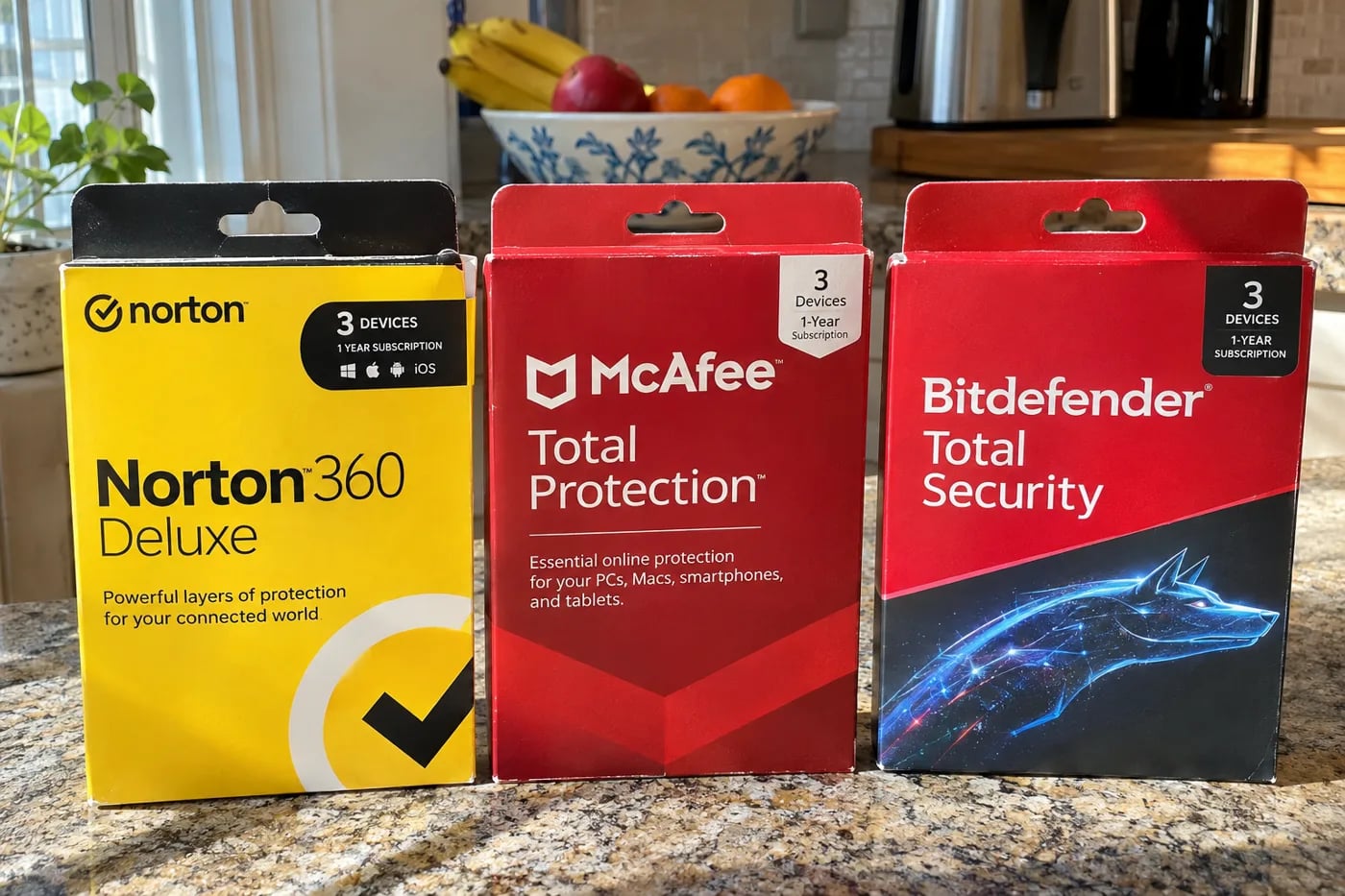
Antivirus is the part that catches bad files. Most of what raises the price sits on top of it: a VPN, a password manager, online backup, identity tools and "tune-ups."
Sometimes the jump between tiers is small enough to be worth it. Bitdefender Premium Security costs $79.99 for the first year, and Bitdefender Total Security costs $59.99. For that $20 difference, Premium adds unlimited VPN traffic and a password manager (an app that remembers your passwords so you don't have to). If you'd use one of those, $20 is cheap. If you'd use none, it's $20 for icons.
Other extras come with conditions in small type:
- McAfee's VPN on its Plus and Premium plans covers 5 devices and becomes unlimited only with auto-renewal switched on. Every McAfee tier also includes "PC Optimization," a tune-up tool.
- Norton's tiers differ mainly in device count and cloud backup (50 GB on Deluxe, 100 GB on Premium). If your photos are already backed up somewhere else, the extra space is storage you'll never open.
The extra most worth a look is scam protection, which some brands call phishing protection. Phishing means fake messages that pretend to be your bank or a company you use. They differ a lot. Norton's basic scam protection scans texts on phones only, and its scam-call blocking and email checking come only with the Norton 360 with LifeLock plans. Bitdefender's Scam Copilot checks Gmail and Outlook email, texts, WhatsApp, Messenger and more, and it comes with Premium Security and the Ultimate plans.
A commenter on r/ask_privacy summed up what many buyers actually want: "I'd rather pay a little more for software that stays out of my way than get the absolute cheapest deal."
11Fully removing the old antivirus first
Two security programs on one computer get in each other's way. Microsoft advises against running other antivirus or antispyware products alongside Windows Defender, since doubling up can slow the PC and cause install or update errors. So when you switch brands, get the old one fully out first.
Norton has a free Norton 360 Remover for Windows. It can remove Norton, or remove and reinstall it, followed by a restart. If it throws an error, run it in Safe Mode, a stripped-down way of starting Windows that keeps most programs from loading.
Uninstalling does not stop the billing. Norton says so in plain words: "Uninstalling the application does not automatically cancel your subscription." The program disappears and the charge doesn't, so turn off renewal first.
Two commenters in one r/ask_privacy thread say a big-name suite slowed a laptop badly and was very hard to remove completely.
10Security suites that slow an older computer

AV-Comparatives, an independent test lab in Austria, measured how much security suites slow a computer. Its September 2026 performance test of 20 consumer products on Windows 11 gave each an impact score. Lower means less slowdown.
| Product | Impact score, Sept 2026 | Sept 2025 |
|---|---|---|
| McAfee Total Protection | 3.1 | 7.6 |
| Norton Antivirus Plus | 4.9 | 3.8 |
| Bitdefender (Total Security in 2026) | 8.7 | 14.6 |
| ESET | 9.5 | not given |
| Microsoft Defender | 13.5 | 13.5 |
| Malwarebytes Premium | 19.1 | not given |
| TotalAV Premium | 30.5 | 22.8 |
Look at Bitdefender. In the September 2025 test it scored heavier than the free Windows protection; a year later it scored well under it. Rankings move from test to test, and the lab itself says results only "give an indication." A "lightest antivirus" badge from last year is last year's news.
PCWorld measured Norton 360 Deluxe on its own. It had almost no effect while sitting idle, ran about 6% slower during a full scan, and nearly 10% slower on office work during a scan. PCWorld says that matters most on mid-range and budget PCs.
That's the machine people keep asking about. In Reddit threads about which suite to buy, older home PCs come up in several posts, along with a plain wish: no slowdown, no nagging pop-ups.
9Antivirus for iPhones, iPads and Macs

When a deal counts your iPhone as one of its 5 devices, it's counting something that already has its own protection.
Apple says "All third-party apps are sandboxed." Think of each app living in its own fenced yard: it can't gather or change what other apps store, and it can't change the phone itself.
Macs come with more. Apple says "macOS includes built-in antivirus technology called XProtect," and updates it automatically, separate from the big system updates. A second layer, Gatekeeper, checks apps to stop malware before it ever launches.
On iOS 26, iPhones can filter texts from unknown senders for free: in Messages, tap Filters, then Manage Filtering, and turn on Screen Unknown Senders. It is off by default in iOS 26, and time-sensitive texts such as verification codes still reach you.
If the only reason you're moving up a tier is to "cover" your iPhone, decide whether that's worth the renewal price on its own.
8A VPN on hotel and airport Wi-Fi

You're at the gate, the free network is called something like "Airport_Guest," and a VPN ad is telling you hackers are sitting three rows away.
The FTC is calmer about it: "Because of the widespread use of encryption, connecting through a public Wi-Fi network is usually safe." Encryption means the website scrambles what you send, so other people on the network can't read it. The FTC names coffee shops, airports and hotels.
Its checks are simple:
- Look for the lock or "https" at the start of the web address.
- Remember the lock only means the connection is scrambled. Scammers "create fake websites and encrypt them," so a fake store can have a lock too.
- Keep your security software, operating system and browser up to date, and turn on automatic updates.
That FTC page doesn't mention VPNs at all.
7Two- and three-year VPN contracts
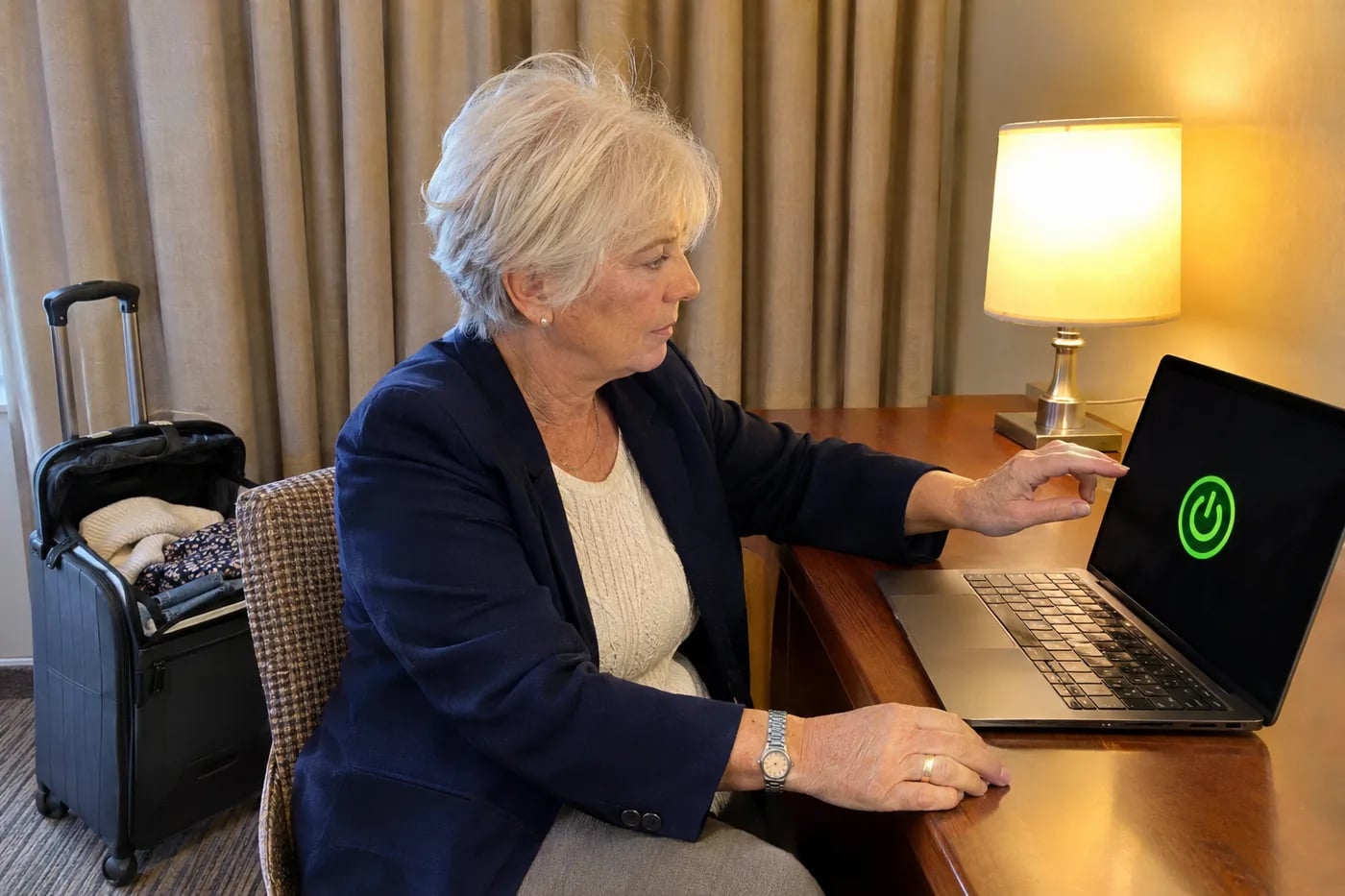
If you'd only use a VPN on trips, the long contract is mostly a bet on your own memory.
Say you take one three-month trip a year:
- NordVPN month to month: $14.99 a month, so about $45 for the trip.
- Surfshark month to month: $16.45 a month, so about $49.
- NordVPN's 2-year plan: $3.49 a month, which is about $84 upfront, and it renews higher.
- Surfshark's 27-month deal: $2.49 a month, or $67.23 upfront. Surfshark's own page doesn't show the renewal price, and Security.org puts it at $79 a year.
Over two years with one trip each year, NordVPN month to month comes to about $90 against $84 upfront for the 2-year plan. That's six dollars to never be locked in. Surfshark's long plan is cheaper by about $30 over the same two years, but Surfshark's own page doesn't show the renewal price. Security.org puts it at $79 a year, so check the renewal price and cancel before the 27 months end.
Read the money-back guarantee closely before you count on it. Surfshark's 30-day refund only covers purchases on its own website, and you can claim it once per customer. NordVPN's 30 days doesn't apply to App Store purchases, so signing up through the App Store may cost you the guarantee.
An occasional VPN user on r/VPNReviewHub said what plenty of light users feel: "I also don't love the idea of locking into a long plan and then regretting it."
6Covering a relative's computer on your plan

On a Bitdefender family plan, the buyer keeps ownership of the subscription as the family manager.
The Family tier covers 5 people on up to 25 devices. To add someone:
- Open Bitdefender Central.
- Go to My Subscriptions.
- Click + Add members and send the invite.
They have 30 days to accept. After that, you can see each member's devices, and on a device that's turned on and online, you can start a malware scan or an update remotely. A relative's laptop three states away can get checked from your own chair.
Count devices before you buy, because phones count too:
- Norton 360 Deluxe: 5 devices across Windows, Mac, Android and iPhone. Premium covers 10.
- McAfee Total Protection: Basic 1, Plus 5, Premium unlimited.
A phone, a tablet and a laptop of your own, plus a relative's two, already fills a five-device plan with nothing to spare.
Covering a child's computer? The FTC says parents can freeze a child's credit for free if the child is under 16.
5Credit card or debit card for the purchase

Pay with a credit card. If the "deal site" turns out to be fake, the difference can run to hundreds of dollars.
| Card | What you could owe for charges you didn't make |
|---|---|
| Credit card, only the number stolen | Generally nothing |
| Credit card, card lost | $50 at most |
| Debit card, reported within 2 business days | $50 at most |
| Debit card, reported later | Up to $500 |
| Debit card, over 60 days after the statement | You could be liable for later transactions |
With a debit card, how fast you report changes what you owe. With a credit card, the most you owe for a lost card is $50.
If you've already paid a scammer, the FTC says to contact your card issuer right away using the number on the back of the card and ask for a refund. Then consider a free credit freeze at all three credit bureaus.
See more: 17 Things Bank Tellers Wish You Would Stop Doing →
4Paid identity protection vs a free credit freeze

A credit freeze locks your credit file, and the FTC says "There's no cost to place or lift a credit freeze, and it doesn't affect your credit score." It lasts until you lift it. The only chore: you contact Equifax, Experian and TransUnion separately.
The paid identity theft protection in pricier suites has holes the FTC spells out:
- Credit monitoring won't alert you to withdrawals from your bank account, or to someone filing a tax return in your name.
- Most identity monitoring won't alert you if someone misuses your Medicare, Medicaid or Social Security benefits.
Then there's the insurance. Norton 360 with LifeLock lists insurance of up to $25,000 (Select), up to $100,000 (Advantage) and up to $3 million in total (Ultimate Plus). The FTC's view of that kind of policy: identity theft insurance "generally does not reimburse money stolen." The big number on the box mostly isn't for the money a thief takes.
See more: 12 Places to Keep Your Savings Other Than a Big-Bank Account, and the Catch With Each →
3Fake "your subscription renewed" emails and calls
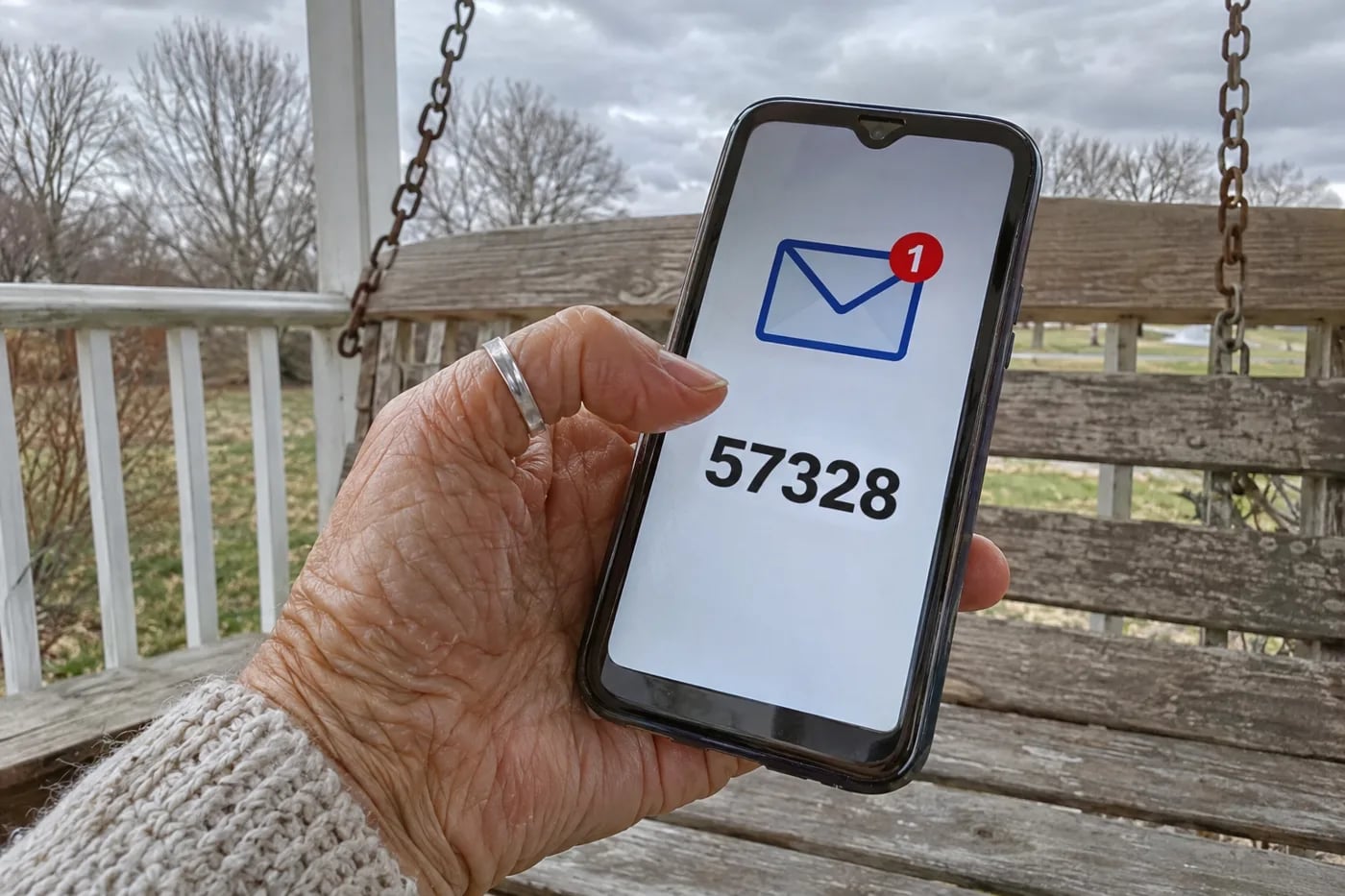
The email looks official. Thank you for renewing your Norton subscription. Your card has been charged several hundred dollars. If you didn't authorize this, call within 24 hours.
The FTC says scammers send exactly this, often using names like Geek Squad, McAfee or Norton. Call the number and they may ask to take over your computer remotely, or walk you to a fake "refund" page. Then comes the twist: they claim they refunded too much and need you to send the difference back.
The habit that beats it: never use the number in the message. The FTC's steps:
- Contact the company using a number you know is real.
- Check your card or bank account for the charge.
- No charge? It's a scam. Delete it.
The fake number can also find you through search. The FTC warns that "Scammers often use paid search ads, too," and those ads can sit at the very top of the results. Type the company's web address into your browser yourself, if you know it. For Norton, that means the Contact us link on support.norton.com. Bitdefender handles cancellations and refunds by email.
Randy Watkins, chief technology officer of the cybersecurity firm Critical Start, put it in one line that works every holiday season: "Never give your credit card information over email, phone or text."
2A store-bought key instead of renewing direct
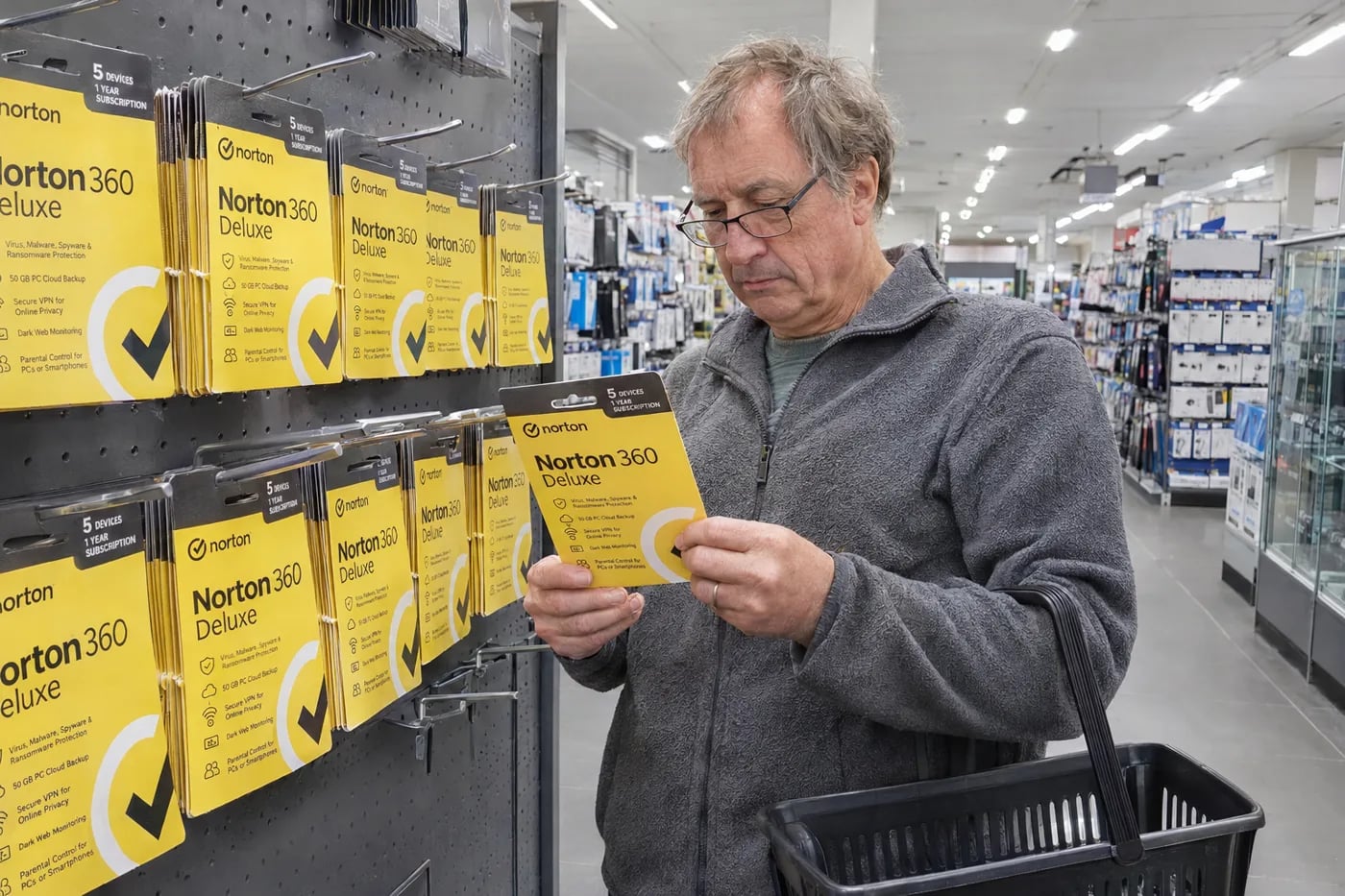
When your antivirus renews at the regular price, you're paying the full sticker. A fresh product key from a store, which is a code you type in to start a new subscription, can cost a fraction of that.
PCWorld reports that Amazon and Newegg sell Norton licenses, and during last year's Black Friday a one-year Norton 360 Deluxe key "dropped to $20." TechRadar's Black Friday 2026 list shows McAfee Total Protection for 5 devices at $25 at Amazon. Set a $20 Norton key against a $124.99 renewal and you keep roughly $100 a year, as long as a similar price comes around again and auto-renewal is off.
One Reddit commenter says renewing directly usually costs more than buying a fresh retail key.
That timing rule is the trap. Norton says the remaining days with your current subscription do not get added to the new key's subscription, so entering a new key with four months left throws those four months away.
Check other stores' prices against the numbers above before you buy.
1The free antivirus already built into Windows

If your computer runs Windows 10 or 11, you already own antivirus, and an independent lab rated it near-perfect.
Microsoft says "Microsoft Defender Antivirus comes built-in to Windows 10 and Windows 11." If no other product is installed, or yours has expired, Defender "will automatically turn on." Microsoft's own words: you "don't need to install any other real-time antivirus or antispyware software." Real-time protection means it checks files as they arrive and open, without waiting for you to run a scan.
Then there's the lab result. In AV-TEST's July and August 2026 test of 15 home security products on Windows 11, Defender scored 17.5 out of 18. It stopped 100% of 297 real-world attacks, the brand-new kind with no known fix yet, when the industry average was 99.9%. It also earned the lab's TOP PRODUCT award. Price: nothing.
Asked whether Windows Security is enough, PCWorld contributor Jon Martindale answered: "For the most part, yes. The actual security features are effective at what they set out to do." He calls it a baseline, and says people who make risky choices or want extras such as a VPN, a password manager or identity tools should consider a paid suite. Commenters across Reddit threads about Black Friday antivirus land in the same spot: built-in protection, plus updates, plus common sense.
That last part matters. Randy Watkins warns that "Sometimes clicking that link is enough," and the protection he describes is antivirus on its standard settings, a fully updated browser and current Windows updates, working together.
One catch for Windows 10 owners. Windows 10 support ended October 14, 2025, but Microsoft's free Extended Security Updates for home users now run until October 12, 2027. You enroll one of three ways:
- Sync your PC settings with Windows Backup, for free.
- Redeem 1,000 Microsoft Rewards points.
- Pay $30 once.
One license covers up to 10 devices, and the PC has to be on Windows 10 version 22H2.
Three-year cost on Windows 11: $0. On Windows 10 with free enrollment, it's $0 until October 12, 2027, when those updates stop.
The bottom line
Before you buy anything, find out what you're paying now. Search your card statements for last year's antivirus charge. If there isn't one, you may already be running the free protection and doing fine.
If there is one, the next question is which extra you actually used in the past year. The VPN you opened twice? The 50 GB of backup with nothing in it? The answer tells you whether you need a suite at all, or just a cheaper one.
And if you do buy, the important number is the second one. Put the renewal date on a calendar today, with the renewal price written next to it.
Up next
17 Things You're Still Paying For and Don't Need
These are the things to stop paying for, from a $19-a-month phone protection line to mortgage insurance you can ask to drop, with where each recurring charge hides and the call, letter or click that ends it.
Read the list →


Bonus: Five money-back moves the deal pages skip
- If a paid trial that came with a new laptop turned into a Norton charge, that first charge gets the same 60-day refund window as any other annual purchase. Check the date and ask.
- Before picking a Norton monthly plan to "stay flexible," know that monthly plans get only 14 days for a refund, and only on the first charge.
- If a store or another company billed you for Norton, Norton's own refund policy excludes that purchase. Ask the store about its return policy before you open the box.
- If freezing your credit at three bureaus feels like too much this week, a fraud alert is free, lasts one year, and needs only one bureau: that bureau has to notify the other two.
- Before you call any number about your computer, run it past a trusted friend or family member first. The FTC suggests that.
Questions people also ask
Is Windows Defender good enough or do I need to pay for antivirus?
For most home users on Windows 10 or 11, yes, the built-in protection is enough. In AV-TEST's July and August 2026 test it stopped 100% of real-world attacks and scored 17.5 of 18, and Microsoft says you don't need another real-time antivirus. Pay if you make risky choices or want extras such as a VPN, a password manager or identity tools.
How much does antivirus cost after the first year?
For Norton and McAfee, much more than the Black Friday price. Norton 360 Deluxe goes from $49.99 to $124.99 a year, and McAfee Total Protection Basic goes from $29.99 to $84.99. Bitdefender's page says only that year two is billed "at the applicable renewal price," without the amount.
Is it cheaper to buy a new antivirus key than to renew?
It can be. A retail Norton 360 Deluxe key dropped to $20 last Black Friday, against a $124.99 renewal. It only works if you turn off auto-renewal and enter the key when your old subscription runs out, because Norton doesn't carry leftover days over.
Can I cancel and get a refund if I change my mind?
Usually, within a set window. Norton refunds annual plans within 60 days of purchase or of each renewal charge, and Bitdefender within 30 days of purchase or automatic renewal, by email to refunds@bitdefender.com. NordVPN and Surfshark offer 30 days, but not on app-store purchases, and Surfshark allows only one refund per customer.
Do I need a VPN if I only use public Wi-Fi sometimes?
The FTC says connecting through public Wi-Fi "is usually safe" because most sites now use encryption. Check for the lock or "https" and watch for fake sites. If you still want one for a trip, a month-to-month plan at $14.99 to $16.45 can cost less than a 2-year contract you barely use.
What should I do if I paid a fake antivirus renewal or a tech-support scammer?
Call your card issuer or bank right away, using the number on the back of the card, and ask for a refund. If you let the scammer into your computer, the FTC says to update your security software, run a scan and change your passwords. If you gave out your Social Security number, go to IdentityTheft.gov and consider a free credit freeze at all three bureaus.
Did any of these feel familiar?
Know someone who needs this?
Sources cited in this article
This article links to 37 outside sources, listed here so you can read them yourself.
- Renews at $124.99 a year www.security.org/antivirus/norton
- Auto-renewal is switched on when you sign up www.pcworld.com/article/393283/norton-360-deluxe-antivirus-review.html
- "goes up to $84.99 per year for each year after the first one." www.security.org/antivirus/mcafee
- "at the applicable renewal price." www.bitdefender.com/en-us/consumer/premium-security
- "I'd honestly care more about the renewal price than the Black Friday price." www.reddit.com/comments/1wt1q21
- Cancellation and refund policy support.norton.com/sp/en/us/home/current/solutions/kb20100113164023EN
- Auto-Renewal Settings www.mcafee.com/support/articles/en_US/Knowledge/000001781
- Was struck down by a federal appeals court in 2025 www.jonesday.com/en/insights/2026/05/ftc-revives-clicktocancel-rule-new-risk…
- "describes the difference between the first term and renewal term subscription prices." www.bitdefender.com/en-us/consumer/total-security
- "old price" of $511.65 surfshark.com/pricing
- "openly and actively offered for sale, for a reasonably substantial period of time," www.law.cornell.edu/cfr/text/16/233.1
- Scans texts on phones only newsroom.gendigital.com/2025-02-19-Norton-Launches-Enhanced-AI-Powered-Scam-…
- Checks Gmail and Outlook email, texts, WhatsApp, Messenger and more www.bitdefender.com/en-us/news/bitdefender-launches-scam-copilot-a-powerful-…
- "I'd rather pay a little more for software that stays out of my way than get the absolute cheapest deal." www.reddit.com/comments/1x783nd
- Microsoft advises against support.microsoft.com/en-US/defender/antivirus-and-antimalware-software-faq
- Norton 360 Remover support.norton.com/sp/en/us/home/current/solutions/v20240301142500636
- September 2026 performance test av-comparatives.org/tests/performance-test-september-2026
- September 2025 test av-comparatives.org/tests/performance-test-september-2025
- Reddit threads about which suite to buy www.reddit.com/comments/1x4s91j
- "All third-party apps are sandboxed." support.apple.com/guide/security/security-of-runtime-process-sec15bfe098e/web
- "macOS includes built-in antivirus technology called XProtect," support.apple.com/guide/security/protecting-against-malware-sec469d47bd8/web
- Filter texts from unknown senders for free support.apple.com/en-us/125068
- $14.99 a month www.security.org/vpn/nordvpn
- $16.45 a month www.security.org/vpn/surfshark
- "I also don't love the idea of locking into a long plan and then regretting it." www.reddit.com/comments/1y0x6iq
- Keeps ownership of the subscription as the family manager www.bitdefender.com/consumer/support/answer/94159
- Start a malware scan or an update remotely www.bitdefender.com/consumer/support/answer/112405
- $50 at most www.consumerfinance.gov/ask-cfpb/am-i-responsible-for-unauthorized-charges-i…
- $50 at most www.consumerfinance.gov/ask-cfpb/how-do-i-get-my-money-back-after-i-discover…
- "Never give your credit card information over email, phone or text." www.youtube.com/watch?v=OjWqm6QYgUE&t=61s
- McAfee Total Protection for 5 devices at $25 at Amazon www.techradar.com/black-friday/black-friday-antivirus-deals
- The remaining days with your current subscription do not get added to the new key's subscription support.norton.com/sp/en/us/home/current/solutions/v89978947
- Scored 17.5 out of 18 www.av-test.org/en/antivirus/home-windows/windows-11/august-2026/microsoft-d…
- "For the most part, yes. The actual security features are effective at what they set out to do." www.pcworld.com/article/2379676/is-windows-11s-built-in-antivirus-security-e…
- Reddit threads about Black Friday antivirus www.reddit.com/comments/1wpppvp
- "Sometimes clicking that link is enough," www.youtube.com/watch?v=OjWqm6QYgUE&t=371s
- Extended Security Updates www.microsoft.com/en-us/windows/extended-security-updates

Jheremy Raquel (JR) Agabao
Editor
JR Agabao edits PennySaver USA. With a working background in bookkeeping and HR, she checks the prices, rules and fine print in every guide before it reaches readers.
More from Jheremy Raquel (JR) Agabao

Most read
- 115 Bank and Card Fees Worth One Phone Call to Get Waived
- 215 Things to Know About the Best Bank Account Bonuses That Can Beat a Black Friday Sale
- 316 Things Black Friday Antivirus and VPN Deals Won't Tell You Before You Buy
- 412 Places to Keep Your Savings Other Than a Big-Bank Account, and the Catch With Each