






17 Things Bank Tellers Wish You Would Stop Doing
From a cash withdrawal "trick" that's really a federal crime to the yearly dollar cost of a sleepy checking account, these are the things bank tellers wish customers would stop doing, and what each one costs you.

By Jheremy Raquel (JR) Agabao, Editor
Updated · 20 min read
- Written by our editor
- Cited 39 sources
- How we review
This is general information, not financial, tax or legal advice for your situation. Read our full disclaimer
The question at the teller window that annoys people most is waiting at #1, along with the number that explains why they keep asking it.
The pen on the little beaded chain stops two inches short of where you need to sign. You stretch, you scribble, you slide the slip across the counter, and the teller gives you a look you can't quite read.
Some of that look is about the pen. More of it is about the things you'd never guess are costing you: a fee you didn't have to pay, a check that sat for a week, interest that never showed up, a phone call that wasn't from your bank at all.
17Walking up before the teller calls "next"
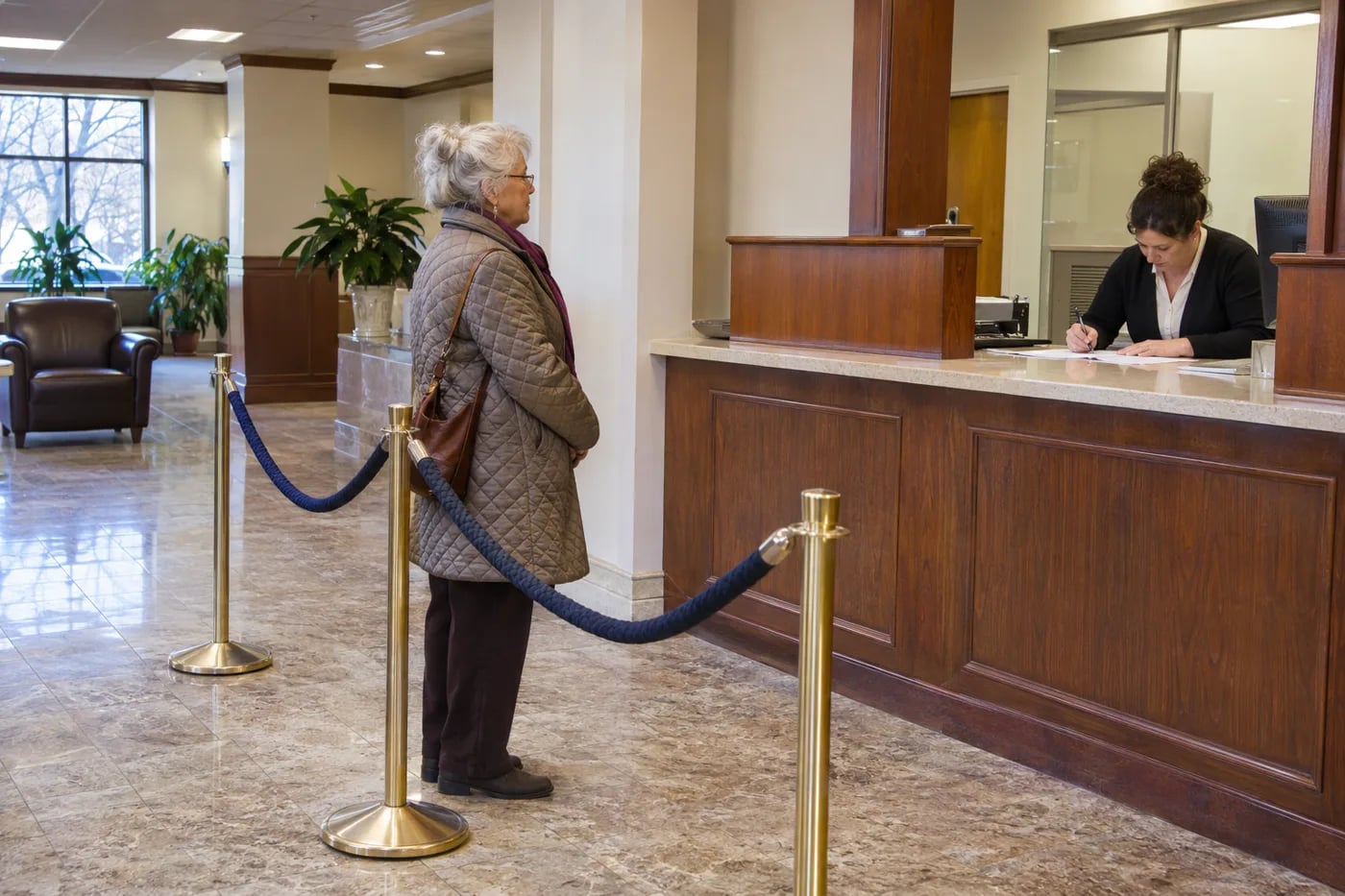
An open window with nobody at it looks like a free pass. To the person behind it, it usually means the opposite.
"If I didn't call you up, I'm not ready! Don't just walk up to my window!"
A bank teller, in the comments on a TikTok about customers who skip the line
Other tellers in that thread say it happens every week, and some say several times a day. The teller may be closed out for the day or doing other work for the branch. Either way, they can't take your transaction until that's done.
There are also fewer of them than there used to be. The Bureau of Labor Statistics counted 339,200 teller jobs in 2025 and expects 13% fewer by 2035, down to roughly 294,500. Fewer jobs likely means fewer open windows than you remember. Tellers in those same comments describe branches running short-staffed, with one or two people covering everything.
So wait for the "next" or the wave. The bank teller who calls you up is the one who's actually ready to count your money.
16Snapping at the teller over a deposit hold
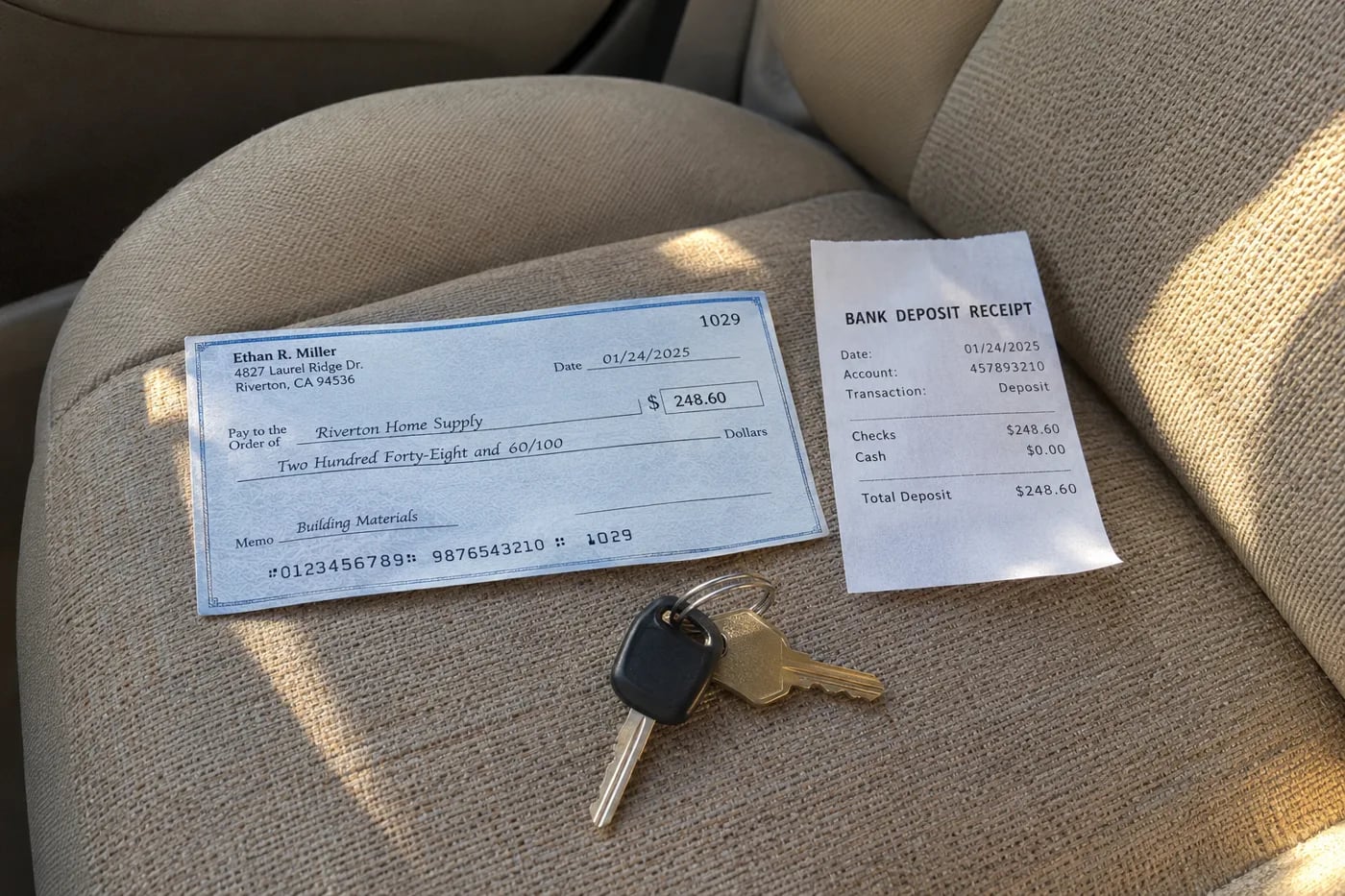
The hold on your check comes from federal rules and your bank's policy, and the teller usually can't lift it. Bank workers on Reddit and TikTok say customers blame them for holds, fees and overdrafts they often have no power to change. One says she deals with held large deposits every day.
The good news is that the rules got friendlier. Since July 1, 2025, the first $275 of a check deposit has to be available the next business day, up from $225. The rest of the check generally follows on the second business day.
That list comes from the Consumer Financial Protection Bureau, the federal agency that enforces these rules.
Longer waits are called exception holds. A bank can use one on a new account, an account that's been overdrawn too many times in six months, a deposit at another bank's ATM, or a check it suspects won't be paid. It can also use one on a deposit over $6,725. For most local checks from other banks, regulators allow up to five extra business days, unless the bank can show that a longer wait is reasonable.
If the bank does put one of these holds on your money, it owes you a written notice with the reason and the date the funds will be available. You usually get it when you make the deposit, and no later than the next business day. Read that date before you argue with anyone.
If you're expecting a large payment, ask whether it can come as a wire or a direct deposit instead of a paper check. Electronic payments are generally available by the next business day, so this kind of hold is far less likely to come up.
15Asking the teller to waive an overdraft fee
You can ask. Just know who you're asking, and how many times you get to.
Bankrate's 2025 survey found an average overdraft fee of $26.77. It found an average of $16.82 for a bounced-payment fee, the one banks call an NSF fee (short for "not sufficient funds"). Overdraft fees showed up on 94% of the accounts it surveyed.
Waivers do happen. In focus groups run by the Consumer Financial Protection Bureau, people said they could often get a single fee waived but "might not be able to get additional fee waivers." Some had better luck when they went in person, or "met with a branch manager rather than a teller."
That last part explains why the answer at the window can sound so final. The teller often isn't the person who can say yes.
So go in person, ask calmly for the branch manager, and bring the date and amount of the fee. If it's your first in a long while, say so. One waiver, asked for politely in the right office, is a realistic goal.
14Showing up minutes before closing with a big job
It's 4:55 on a Friday. You've got a zippered bag of yard sale cash, three checks and a question about your statement.
Before a teller can go home, they have to count the cash they're responsible for and make sure it balances. Every bill. A big job at five to five pushes that count past closing.
The rush may not even get you anything. A bank only has to treat branch deposits as made that day up to its cutoff time. That cutoff can't be earlier than 2 p.m. at a branch, or noon at an ATM. After the cutoff, your deposit can be counted as made on the next business day. On a Friday, that's usually Monday.
Ask your branch what its cutoff is. If it's 2 p.m., your 4:55 deposit was going to count as Monday's anyway. A Monday morning visit gets you the same result, from a teller who isn't watching the clock. For a job that will take a while, ask about booking time. U.S. Bank, for one, lets you schedule a banker in person, by phone or by video.
13Driving in for things your phone can do

For a quick check deposit or a balance, the trip can take longer than the transaction.
Most people would rather skip it. In an American Bankers Association survey published in November 2026, only 10% named the branch as their favorite way to bank. Mobile apps got 44% and online banking got 20%. Even baby boomers picked their phones (32%) and computers (34%) over the branch (18%).
If safety is what keeps you driving in, the association's president, Rob Nichols, argues the other way. Mobile banking, he says, "pairs easy access with safeguards like biometric and two-factor authentication." Biometric means your fingerprint or face unlocks it. Two-factor means a second check, like a code sent to your phone.
There's one catch with mobile deposit: limits, and they can differ from account to account. Wells Fargo, for one, shows each account's limit inside its app rather than publishing a single figure. Look yours up before you photograph a large check.
Then save the drive for the things a person does best: the cashier's check, the problem nobody on the phone could fix, and the fee conversation in #15.
12Walking off without counting your cash
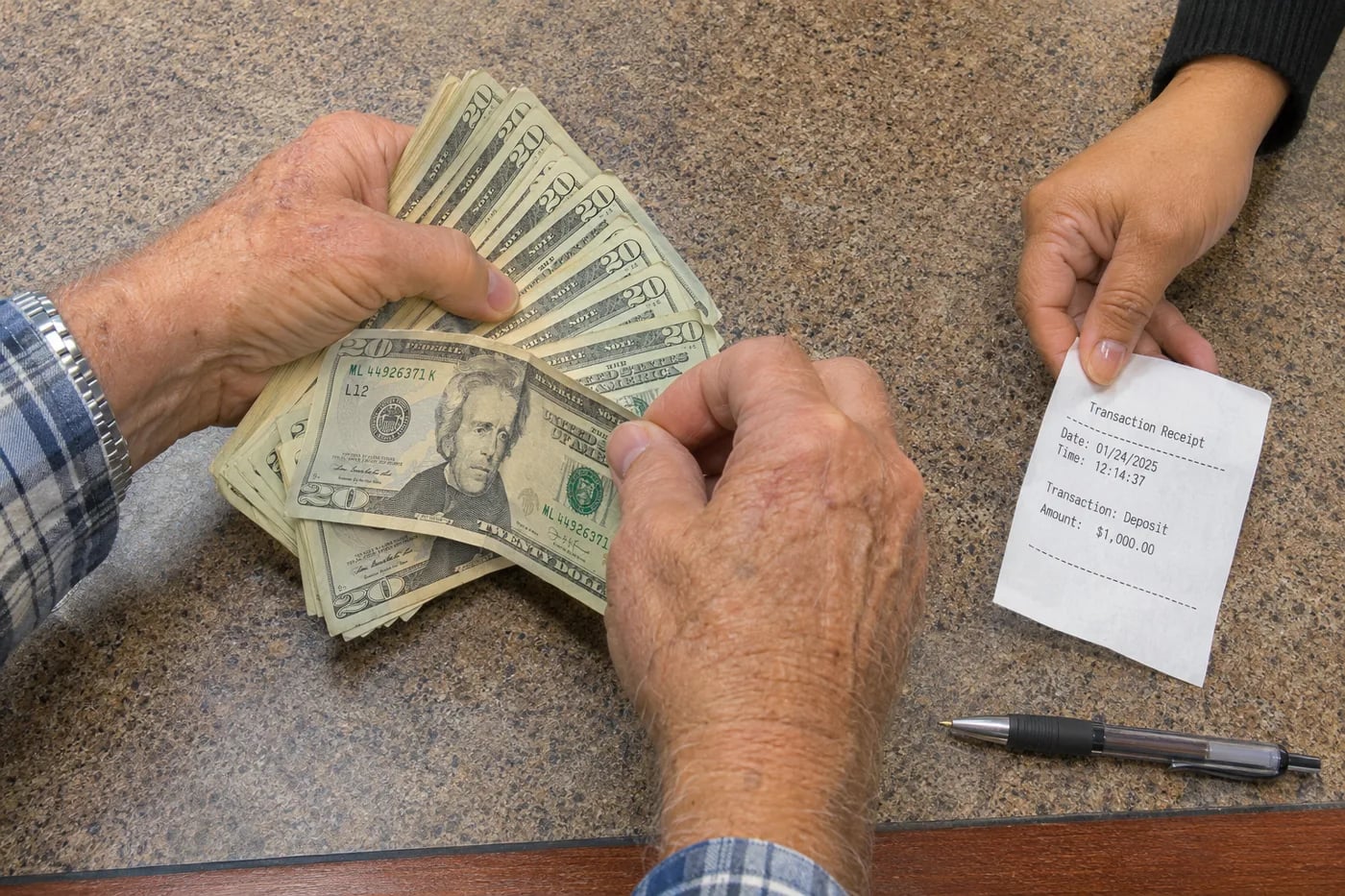
Count it at the counter. Count it both ways.
Two people who started out behind the window call this one of the mistakes they saw most. Steven Kibbel, a certified financial planner and former teller, put it simply: "When people are rushed or distracted, they often make the mistake of miscounting bills."
Christopher M. Naghibi also began as a teller and is now executive vice president and chief operating officer of First Foundation Bank. He sees it from the deposit side: "You would be stunned at the amount of customers who don't count their cash first before handing it over to a teller for a deposit."
You know the moment. The envelope is in your hand, the receipt is in the other, and the person behind you is shifting from foot to foot. Count anyway, before you step aside. At the window, a short stack gets corrected on the spot. From the parking lot, you're making a claim.
After that, monitor your account. When the deposit posts, it should match your receipt to the penny. If you counted $640 at home and the receipt says $620, you want to find that out at the counter.
11Endorsing checks wrong or not at all
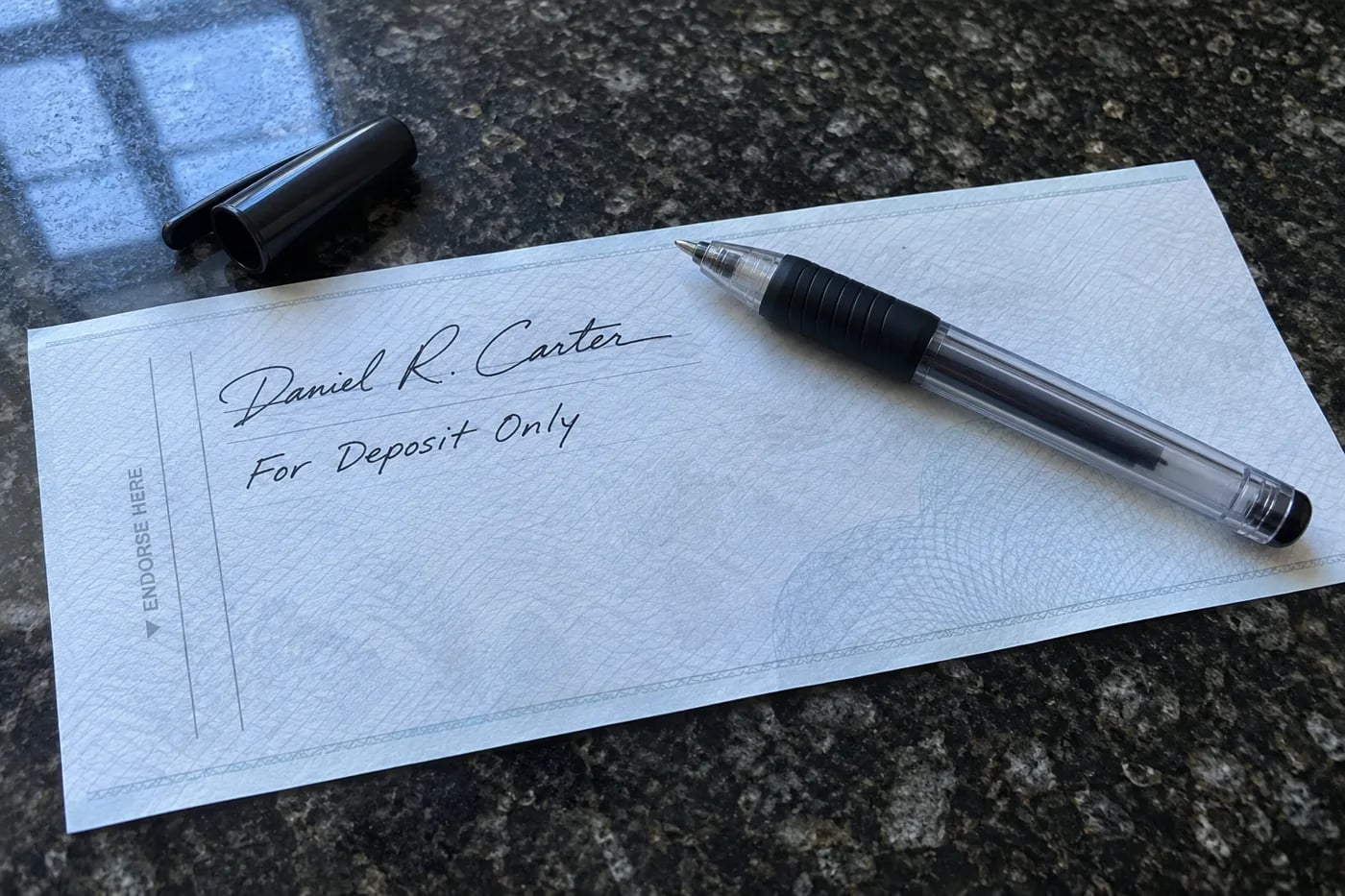
For a mobile deposit, the back of the check needs more than your name.
- Sign it.
- Under your signature, write your bank's exact phrase. Wells Fargo wants "For Mobile Deposit at Wells Fargo Only", or a tick in a "Check here if mobile deposit" box if the check has one. Chase notes that some banks recommend "For Mobile Deposit Only."
- Use dark blue or black ink.
- Sign only when you're about to deposit. Chase's advice: "Wait to endorse a check until you're ready to cash or deposit it."
Why so fussy? Federal check rules that took effect in July 2018 put more of the risk on banks that accept checks by phone or scanner. Banks responded by asking for those extra words, which limit where the check can go.
Skip the signature altogether and you may get the check back. "An unendorsed check can be a security risk and may not be processed at all," Naghibi warns.
And a check you signed on Monday and left in your coat pocket until Friday is a check someone else could try to deposit.
Once a mobile deposit goes through, don't toss the paper check yet. Wells Fargo tells customers to keep it somewhere safe for 5 days, then destroy it.
10Demanding a manager as the opening move
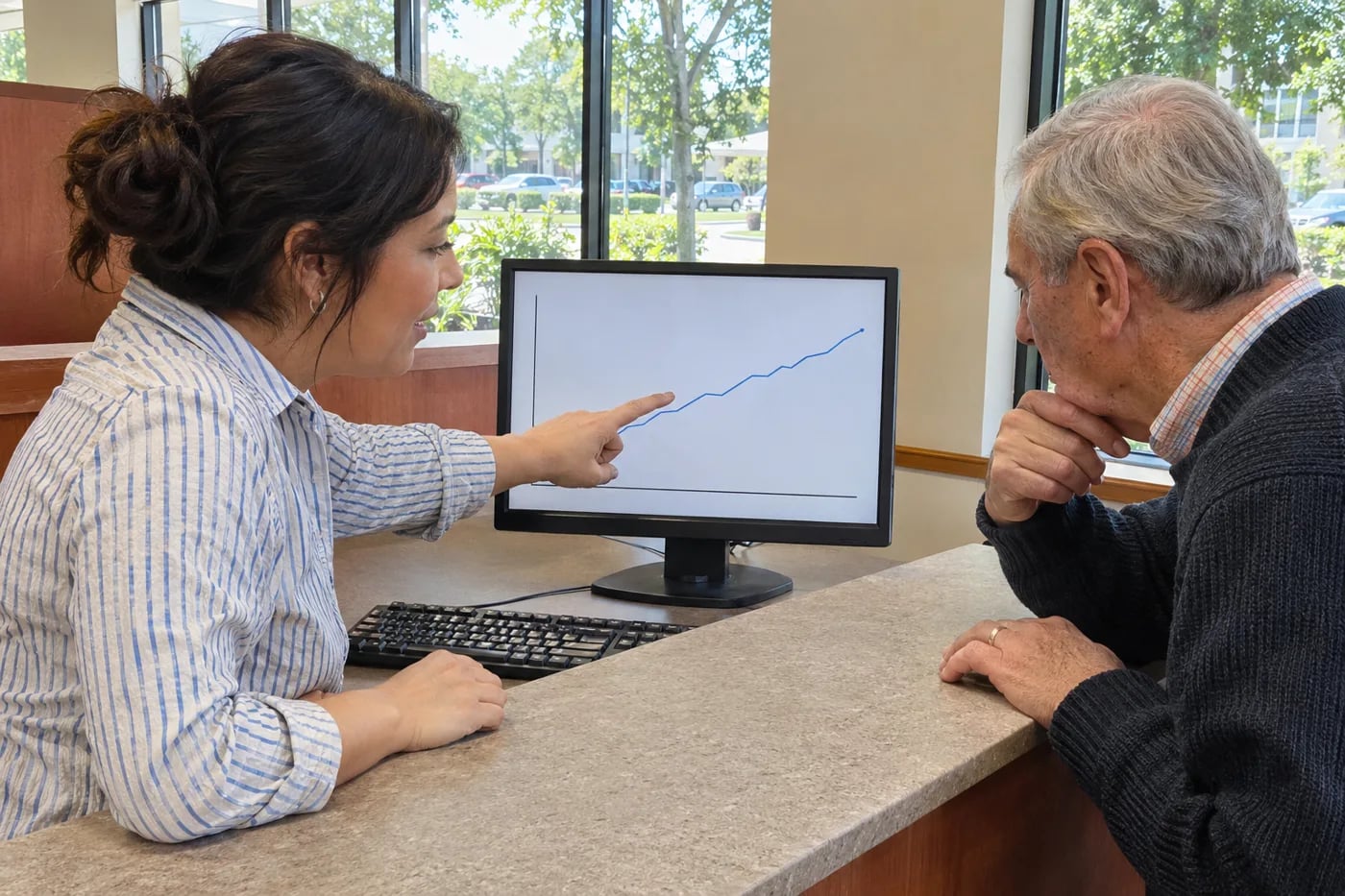
A bank branch worker on Reddit put it this way: "We are absolutely 200x more likely to go out of our way to help you as opposed to those who come in stomping their feet yelling for a manager."
A branch manager can sometimes approve a fee waiver a teller can't. That's exactly why leading with the demand backfires. The person you just steamrolled may be the one who'd carry your exception to the manager's desk and argue for it.
Try it in this order:
- Say what happened.
- Say what you'd like.
- Ask, "Is that something you can approve, or who would?"
You still end up with the manager, and the teller arrives on your side.
If the bank still says no and you think it's wrong, there's someone above the branch. For national banks, the federal regulator's complaint site, HelpWithMyBank, says to "try to resolve your issue directly with your bank first." After that, its helpline is 1-800-613-6743, weekdays from 7 a.m. to 7 p.m. Central. If you use a credit union, the same site sends you to the National Credit Union Administration instead. Your calm first try at the branch is step one of that process.
9Joke nicknames tellers can see

That savings account you renamed in the app? The teller may be able to see what you called it.
Destiny Scott, a bank teller, told TikTok viewers that nicknames set in the mobile app carry over "into our entire system," so staff at the branch can see them. Her video passed 1.9 million views, which suggests a lot of people suddenly remembered what they'd typed.
It isn't a single bank's quirk, either. Instructions from CU Answers, a company that makes credit union software, show tellers clicking a "Show Nicknames" button to pull up members' account nicknames.
An account nickname is genuinely handy. "Car repairs" and "Property tax" keep money where it belongs. Just pick names you'd be fine hearing read back at the counter. "Rainy day" is fine out loud. "Secret Vegas Money" gets you a look.
8Keeping more than $250,000 at one bank
FDIC insurance, the federal guarantee on bank deposits, covers $250,000 per depositor, per insured bank, for each ownership category. Money above that at a single bank can be uninsured if the bank fails. Banks do fail: the FDIC's own list shows several closings in 2026, including Nano Banc in California in September.
You don't necessarily have to move your money to fix this. Ownership categories are the lever. A single account, a joint account and certain retirement accounts each count separately. Each co-owner of a joint account is covered up to $250,000 at the same bank. IRAs at one bank are added together and covered up to $250,000 per person.
The bigger lever is a payable-on-death beneficiary, the person you name to receive the account when you die. Since April 1, 2024, each owner is insured up to $250,000 per different eligible beneficiary, to a maximum of $1,250,000 for five or more.
That last line catches people off guard. In the FDIC's own example, a $500,000 payable-on-death account naming two children is fully insured while both are living. If one dies, coverage "immediately reduces to $250,000."
This only helps if there are people you'd want to name. If there are, the time to call the bank is right after you lose someone on that list.
7Using a debit card for everyday shopping
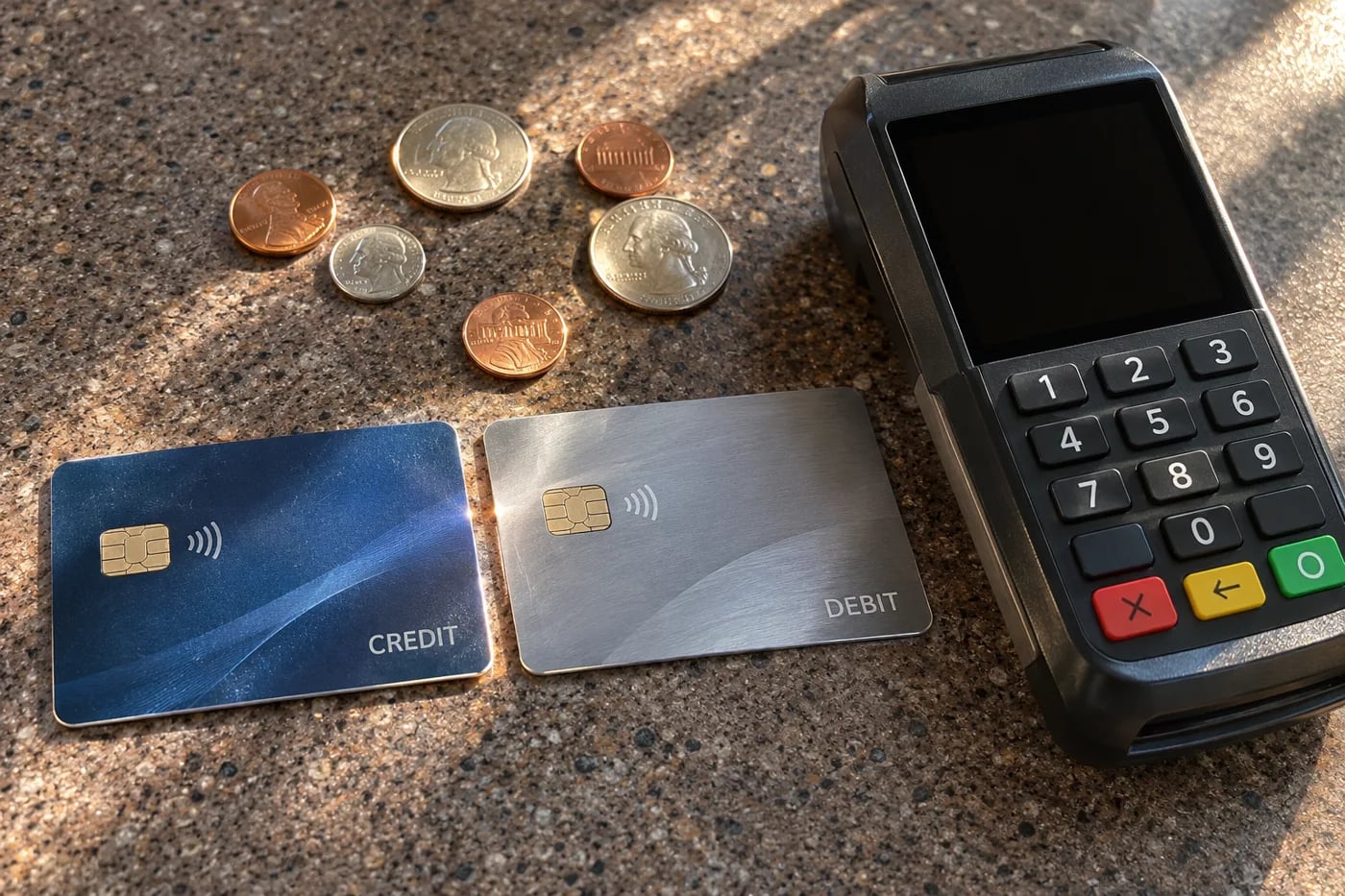
Both cards look the same at the register. When one goes missing, they behave very differently.
The Federal Trade Commission's numbers settle it. Here's what you can owe if the card is lost or stolen:
- Credit card: $50 at most
- Debit card, reported within 2 business days: $50
- Debit card, reported within 60 days: up to $500
- Debit card, reported later: "All the money taken from your ATM/debit card account, and possibly more"
The other difference is whose money goes missing. A financial coach argues on TikTok that a thief with your debit card information gets your actual money, not the bank's. While a credit card charge is in dispute, it's the bank's money on the line. With debit, it's the money you'd set aside for this week's bills. The FTC adds that what you can dispute with debit cards is also more limited.
Her fix is to shop with a credit card, pay it off right away, and keep the debit card for the ATM. That only works if you really do pay it off. If you'd rather stick with debit, two business days is the window to remember.
6Leaving big balances in a checking account that pays nothing
Money in plain checking earns nothing, and on a big balance that nothing gets expensive. Tellers in r/Banking threads describe customers with hundreds of thousands of dollars, sometimes more than a million, sitting in checking that pays no interest at all. Bank workers say many customers never look up what their account is paying.
Here's what $50,000 earns in a year at rates posted in November 2026:
| Where the $50,000 sits | Rate | A year's interest |
|---|---|---|
| Plain checking | 0% | $0 |
| Average interest-bearing checking account | 0.07% | about $35 |
| Average savings account | 0.39% | about $195 |
| One high-yield savings account (Ally) | 3.20% | about $1,600 |
The averages come from the FDIC's national rates, published November 16, 2026. Ally's Online Savings rate was 3.20% a year as of the same date.
If $50,000 isn't your number, the same 3.20% on $5,000 still comes to about $160 a year.
Check the fine print before you move anything. Ally's account has no minimum balance and no monthly fee, but it allows only 10 limited withdrawals and transfers per statement cycle, and the rate can change. Keep enough in checking for bills and card payments, and remember the $250,000 limit from #8 applies to savings too.
5Depositing a check from a stranger or "buyer"
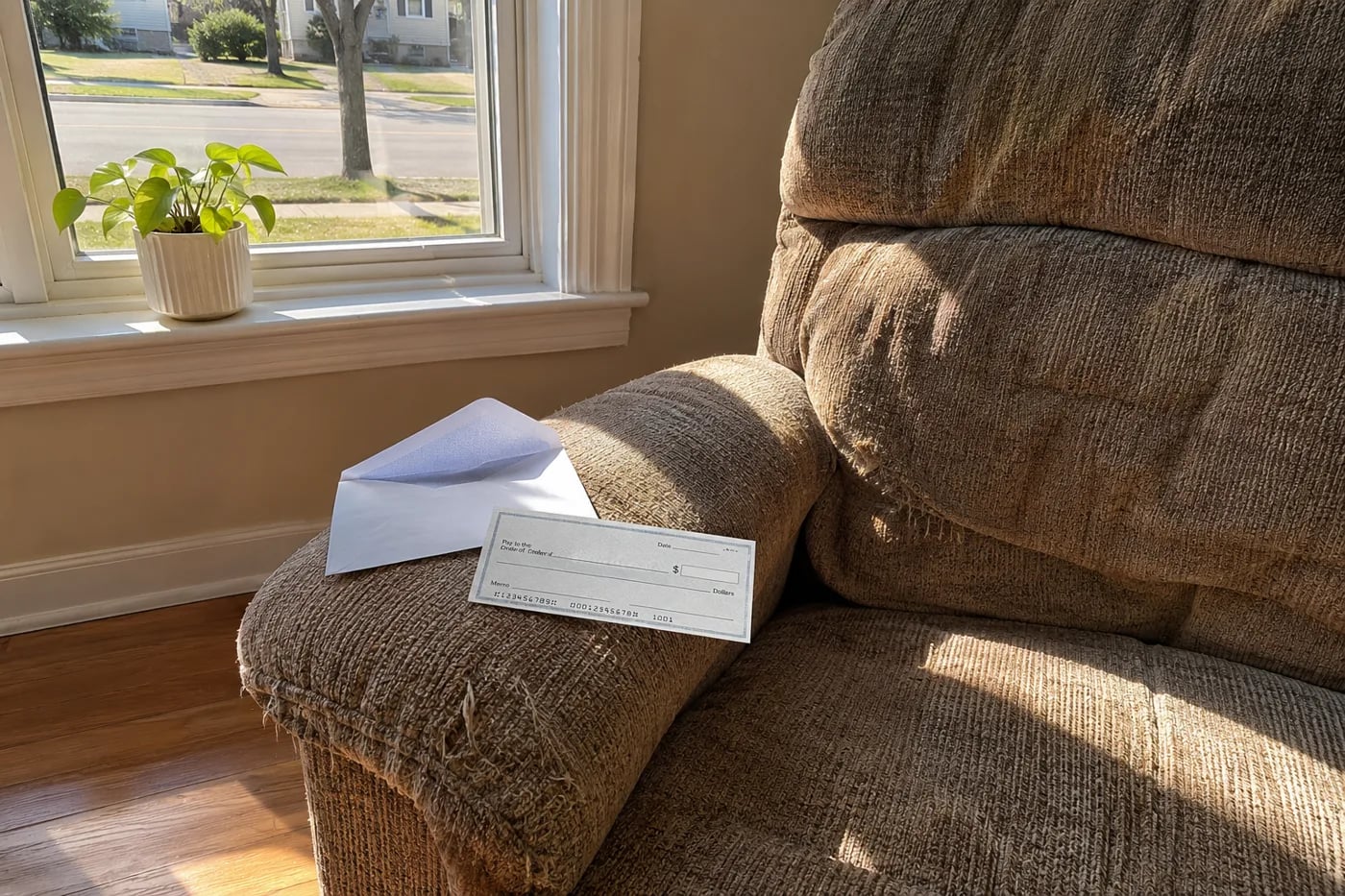
You list the old recliner for $150. The buyer mails a check for $1,150, apologizes for the mix-up, and asks you to wire back the extra $1,000.
Two days later the money shows as available, so the check must be good. That's the trap. The Federal Trade Commission says it bluntly: "Even if you see the funds in your account, that doesn't mean it's a good check." Fake checks can take weeks to come to light.
Remember the fast-release rules in #16. They're about speed. They say nothing about whether the check is real. By the time it bounces, the $1,000 you wired is long gone.
The FTC also notes that scammers "always have a good story to explain why you can't keep all the money." The story changes from scam to scam. The request to send some back doesn't.
Its rule fits on a sticky note: "Don't rely on money from a check unless you know and trust the person you're dealing with." A teller who frowns at a stranger's check has probably seen this exact recliner before.
4Splitting withdrawals to stay under $10,000
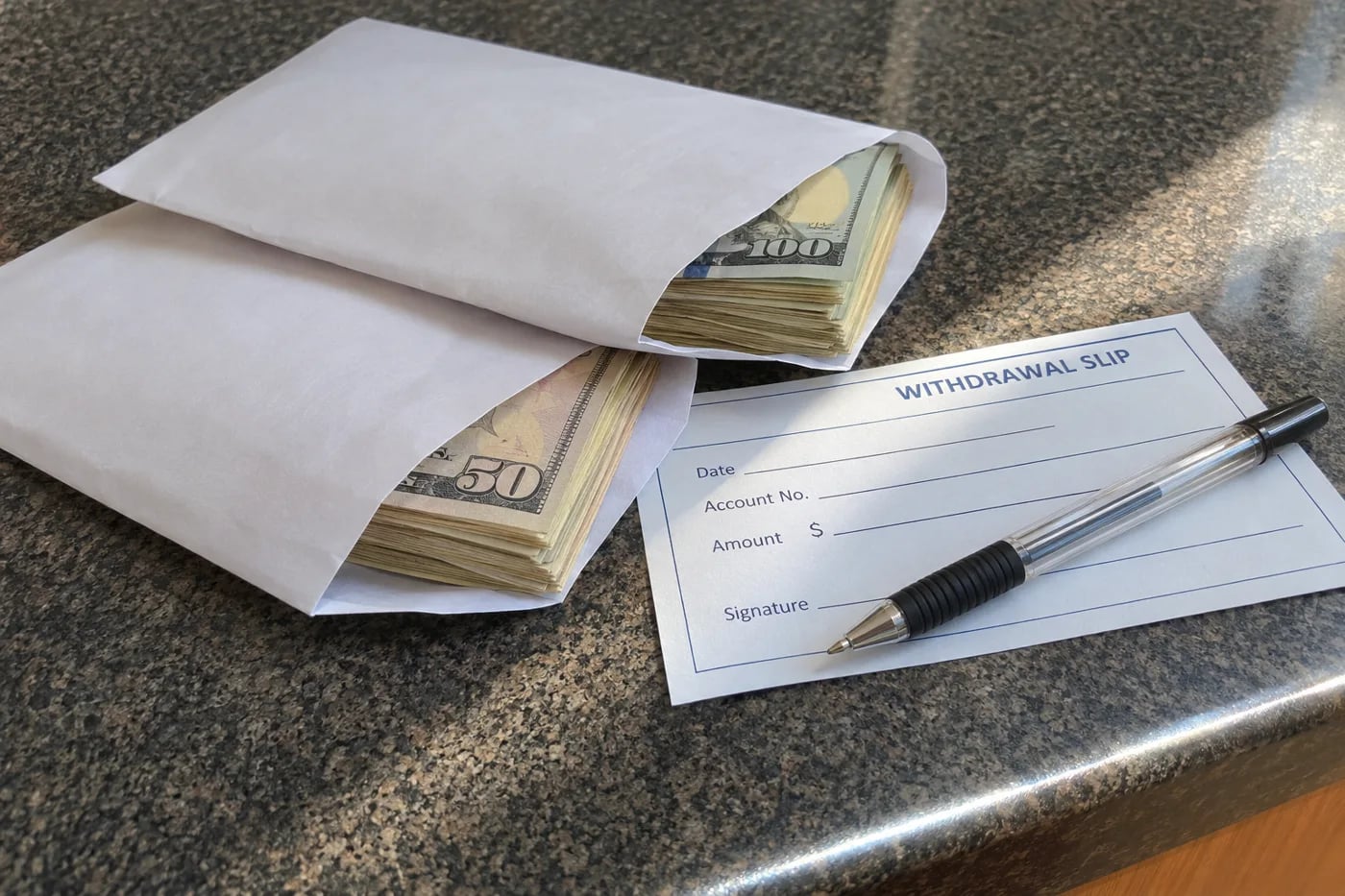
It sounds clever: take out $9,500 today and $9,500 next week, and nobody files anything. That's the move that can actually get you in trouble.
The rule for big cash is simple. Banks must file a currency transaction report, a routine form for the Treasury Department, on cash over $10,000 by or for one person in a day. They record your name, address and Social Security number to do it. The Treasury's anti-money-laundering bureau is clear on the main point: "Large currency transactions are not illegal."
What is illegal is splitting cash transactions to dodge the form. It's called structuring, and the IRS manual doesn't leave wiggle room: "Structuring is illegal regardless of whether the funds are derived from legal or illegal activity." The transactions don't have to top $10,000 at one bank or on one day to count. Your own savings, spent on something completely legitimate, still qualifies.
The penalty is up to 5 years in prison. That rises to up to 10 years, with a doubled fine, when it's part of a pattern of illegal activity involving more than $100,000 in 12 months.
If you need $12,000 in cash, take $12,000. Bank workers replying under a TikTok on the subject say their teller system creates the report automatically. For big amounts, a quick call ahead also helps. One credit union, for example, asks members to call three business days ahead for more than $10,000 in cash, and suggests a certified check instead, which needs no notice.
3Hiding a scammer's script from the teller

If anyone has told you what to say at the bank, that instruction is the scam. The FTC says that if someone tells you to lie to anyone, including bank tellers or investment brokers, "stop. It's a scam." Another FTC warning is just as direct: "Do not lie to avoid the bank's security department."
Scammers coach people because the teller is the one person in the chain trained to notice. A cover story gets your money past that person.
You're allowed to tell the teller everything, including the part you were told to keep quiet. "Somebody on the phone told me not to tell you this" may be the most useful sentence anyone ever says at a bank.
2Believing "your bank" is calling to move your money

The phone rings. A calm voice says it's your bank's fraud department, someone is draining your account, and you need to move your money somewhere safe today.
That's how a lot of the worst losses begin. Among people 60 and older who reported losing $10,000 or more to impersonators in 2024, 41% said it started with a phone call, roughly 3,400 reports. Online ads or pop-ups came next at 15%, and email at 13%.
Stopping a bank impersonation scam takes no tech skill. The FTC says to "Call your bank or broker directly using a number you KNOW is right," not the number the caller used or gave you. Hang up, find the number on your statement or the back of your card, and dial it yourself.
Keep one more rule in your back pocket: "Never transfer or send money to anyone, no matter who they say they are, in response to an unexpected call or message."
If the call was real, your bank will still be there when you call it back.
1Bristling when asked what the cash withdrawal is for
You ask for $4,000 in cash, and the teller asks what it's for. It's your money. Commenters under a TikTok about large withdrawals say exactly that: none of the bank's business, and some say they refuse to answer.
Here's why they ask. Reports from people 60 and older who lost $10,000 or more to scammers posing as businesses or government agencies went from 1,790 in 2020 to 8,269 in 2024. That's about 5 reports a day rising to about 23. Those losses came to $700 million in 2024 alone, up from $122 million in 2020.
Cash is a big part of it. In 16% of those cases the victim paid in cash, about 1,300 reports in 2024. The teller asking about your withdrawal may be the last person to see that money before a stranger does.
The FTC's advice is two sentences long: "The bank teller or employee might not know you, but they do know the signs of fraud. If they ask, share why you're withdrawing cash."
You don't owe anyone a speech. "Paying the roofer." "Cash for a trip." One honest sentence does it.
And if the teller seems worried, that conversation can go both ways. In September 2026, the Treasury's anti-money-laundering bureau and four banking regulators said privacy rules on suspicious activity reports "do not preclude banks from communicating with their customers regarding potentially fraudulent transactions." In plain English, the bank can tell you when it thinks you're being targeted. So you can ask straight out: "Do you see something wrong here?"
The bottom line
The teller usually can't change your fee, your hold or your interest rate. What they can do is notice. They're one of very few people who watch your money move in real time, face to face, and they see the same scams come through the door again and again.
So decide one thing now, while nobody's calling. If a voice on the phone ever tells you to keep a secret from your bank, who's the first person you'll tell? Write that name down next to your bank's real phone number.
Then, next time you're at the window, try asking, "Anything on my account I should know about?"
Up next
15 Things to Know About the Best Bank Account Bonuses That Can Beat a Black Friday Sale
Which bank bonuses a Social Security deposit can earn, what you keep after tax and fees, and when the money lands.
Read the list →
Bonus: four checks the window won't remind you about
- Ask whether you're opted in to overdraft coverage on debit card and ATM transactions. A bank can't charge overdraft fees on those unless you opted in, and you can take that consent back at any time. Doing so won't refund fees you've already paid.
- If money disappears from your account through an electronic transfer, report it and note the date. Your bank has 10 business days to investigate, or 20 if the account is new. If it needs longer, it must give you temporary credit while it finishes, within 45 to 90 days.
- Before you open that higher-paying savings account, check the date on your driver's license or passport. Banks can verify your identity with unexpired government-issued photo ID, so an expired card can cost you a second trip.
- If you've signed a power of attorney, or plan to, ask your bank whether it wants its own form on file too, and sign it now rather than later. Rules vary by state. In Virginia, a bank given a notarized power of attorney must accept it or ask for more information within seven business days.
Questions people also ask
Does a withdrawal over $10,000 get reported?
Yes. Banks must file a currency transaction report for cash transactions over $10,000 by or for one person in a single day, and they record the person's name, address and Social Security or taxpayer number. The Treasury's anti-money-laundering bureau says large cash transactions "are not illegal." What's illegal is splitting withdrawals to avoid the report.
Why is the bank asking what my cash withdrawal is for?
Mostly to catch scams before your money is gone. Reports from people 60 and older who lost $10,000 or more to business or government impersonators rose from 1,790 in 2020 to 8,269 in 2024, and 16% of those victims paid in cash. The FTC advises that if a teller asks, you share why you're withdrawing cash.
How long can a bank hold a deposit?
Most deposits must be available within one to two business days. Since July 1, 2025, the first $275 of a check is available the next business day, and the rest generally the business day after. Banks can add more time for new accounts, deposits over $6,725, repeated overdrafts or a check they suspect is bad, generally up to five extra business days for local checks.
Is it safer to use a debit card or a credit card?
For fraud, a credit card is safer, because the most you can owe on a lost or stolen credit card is $50. With a debit card, it's $50 only if you report within 2 business days, up to $500 within 60 days, and possibly everything after that. Debit purchases also come straight out of your checking account while any dispute is sorted out.
Can bank tellers see your account nickname?
At some banks and credit unions, yes. A teller said on TikTok that nicknames set in the mobile app carry over into her bank's system, and one credit union teller tool has a "Show Nicknames" button. Since you can't always know which kind of system your bank uses, choose names you'd be comfortable having anyone read.
What happens if you keep more than $250,000 at one bank?
Only $250,000 per depositor, per bank, per ownership category is covered by FDIC insurance, so anything above that could be lost if the bank fails. You can raise your coverage without switching banks. Naming payable-on-death beneficiaries adds up to $250,000 per eligible beneficiary, to a maximum of $1,250,000 per owner, though coverage drops right away if a beneficiary dies.
Did any of these feel familiar?
Know someone who needs this?
Sources cited in this article
This article links to 39 outside sources, listed here so you can read them yourself.
- A TikTok about customers who skip the line www.tiktok.com/@debbienohemy/video/7151171566229785898
- 339,200 teller jobs in 2025 and expects 13% fewer by 2035 www.bls.gov/ooh/office-and-administrative-support/tellers.htm
- The first $275 of a check deposit has to be available the next business day nkfcu.org/2025/08/06/july-2025-reg-cc-funds-availability-dollar-threshold-ad…
- Consumer Financial Protection Bureau www.consumerfinance.gov/ask-cfpb/i-deposited-a-check-and-the-bank-is-holding…
- Up to five extra business days ncua.gov/regulation-supervision/manuals-guides/federal-consumer-financial-pr…
- A written notice www.law.cornell.edu/cfr/text/12/229.13
- Average overdraft fee of $26.77 www.bankrate.com/banking/checking/checking-account-survey
- Could often get a single fee waived www.consumerfinance.gov/data-research/research-reports/data-spotlight-consum…
- Schedule a banker www.usbank.com/about-us-bank/customer-service/schedule-appointment.html
- 10% named the branch as their favorite way to bank bankingjournal.aba.com/2026/11/aba-survey-u-s-consumers-are-highly-satisfied…
- Shows each account's limit inside its app www.wellsfargo.com/mobile/apps/mobile-deposit
- Put it simply finance.yahoo.com/news/m-bank-teller-7-biggest-160040491.html
- Sees it from the deposit side finance.yahoo.com/news/m-bank-teller-8-biggest-180016407.html
- Some banks recommend "For Mobile Deposit Only." www.chase.com/personal/banking/education/basics/how-to-endorse-a-check
- Put more of the risk on banks that accept checks by phone or scanner www.orbograph.com/restrictive-endorsements-big-part-regulation-cc-changes
- Keep it somewhere safe for 5 days, then destroy it www.wellsfargo.com/help/mobile-features/mobile-deposit-faqs
- Put it this way www.reddit.com/comments/1vsma74
- "try to resolve your issue directly with your bank first." www.helpwithmybank.gov/file-a-complaint/index-file-a-complaint.html
- National Credit Union Administration www.helpwithmybank.gov/who-regulates-my-bank/index-who-regulates-bank.html
- "into our entire system," www.themarysue.com/bank-teller-has-bad-news-for-anyone-who-gave-their-saving…
- Clicking a "Show Nicknames" button help.cbxcore.com/steps/Content/View_Account_Nickname_via_Teller.htm
- $250,000 per depositor, per insured bank, for each ownership category www.fdic.gov/resources/deposit-insurance/understanding-deposit-insurance
- Including Nano Banc in California in September www.fdic.gov/bank-failures/failed-bank-list
- Each owner is insured up to $250,000 per different eligible beneficiary www.fdic.gov/resources/deposit-insurance/brochures/insured-deposits
- Argues on TikTok www.tiktok.com/@itsyourmoneygirl/video/7618015409832299807
- FDIC's national rates www.fdic.gov/national-rates-and-rate-caps
- Online Savings rate www.ally.com/bank/online-savings-account
- On cash over $10,000 by or for one person in a day www.fincen.gov/system/files/shared/CTRPamphlet.pdf
- Record your name, address and Social Security number www.law.cornell.edu/cfr/text/31/1010.312
- "Large currency transactions are not illegal." fincen.gov/node/17225
- "Structuring is illegal regardless of whether the funds are derived from legal or illegal activity." www.irs.gov/irm/part4/irm_04-026-013
- Up to 5 years in prison www.law.cornell.edu/uscode/text/31/5324
- Call three business days ahead fccu.org/checking-accounts/free-checking
- $700 million in 2024 alone www.cnbc.com/2025/08/08/imposter-scam-ftc-seniors-bank-401k-accounts.html
- "do not preclude banks from communicating with their customers regarding potentially fraudulent transactions." www.fincen.gov/news/news-releases/fincen-agencies-issue-joint-statement-susp…
- Can't charge overdraft fees on those unless you opted in www.consumerfinance.gov/rules-policy/regulations/1005/17
- 10 business days to investigate www.consumerfinance.gov/ask-cfpb/how-do-i-get-my-money-back-after-i-discover…
- Unexpired government-issued photo ID www.law.cornell.edu/cfr/text/31/1020.220
- Must accept it or ask for more information within seven business days 247wallst.com/personal-finance/2026/10/30/her-fathers-bank-wont-accept-the-p…

Jheremy Raquel (JR) Agabao
Editor
JR Agabao edits PennySaver USA. With a working background in bookkeeping and HR, she checks the prices, rules and fine print in every guide before it reaches readers.
More from Jheremy Raquel (JR) Agabao

16 Things Black Friday Antivirus and VPN Deals Won't Tell You Before You Buy
22 min read
Most read
- 115 Bank and Card Fees Worth One Phone Call to Get Waived
- 215 Things to Know About the Best Bank Account Bonuses That Can Beat a Black Friday Sale
- 316 Things Black Friday Antivirus and VPN Deals Won't Tell You Before You Buy
- 412 Places to Keep Your Savings Other Than a Big-Bank Account, and the Catch With Each